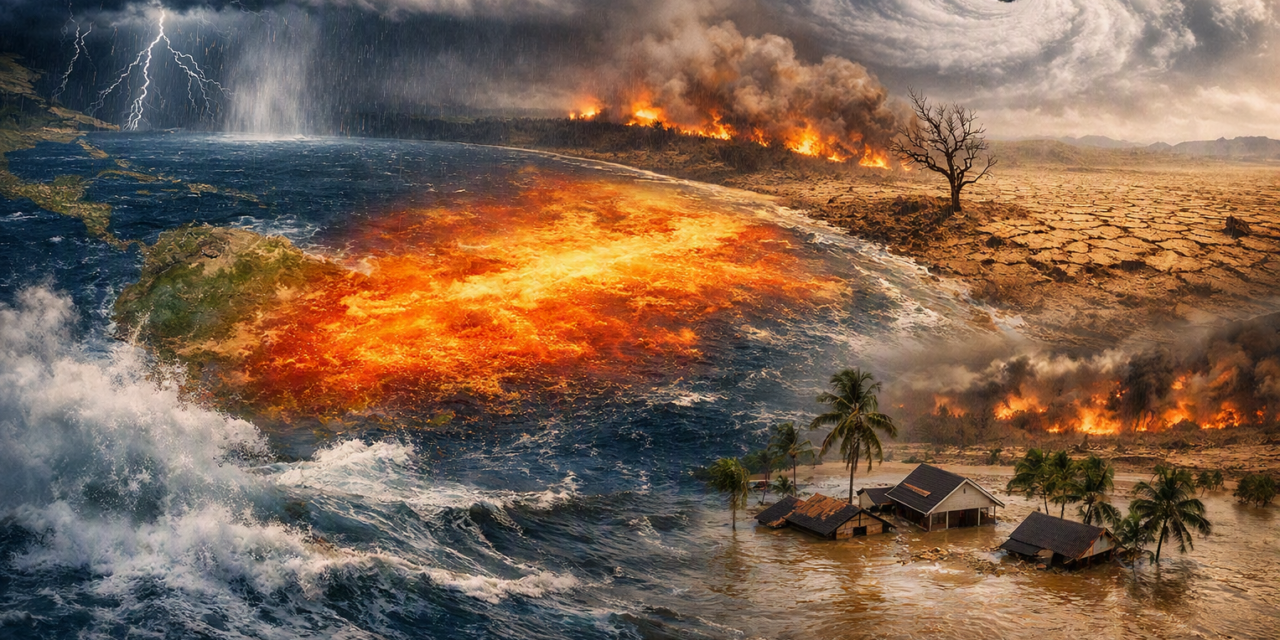
The interplay of the atmosphere, oceans, land surfaces, and ice produces the complicated tapestry known as the Earth’s climatic system. The El Niño Southern Oscillation (ENSO) is one of the most powerful causes of year-to-year variations in climate, especially in terms of world weather patterns. Naturally occurring phenomenon, ENSO is defined by large swings in sea surface temperatures (SSTs) throughout the central and eastern equatorial Pacific Ocean together with shifts in atmospheric pressure. Although the phenomena itself is concentrated in the Pacific, its teleconnections, or remote consequences, reach throughout the globe influencing weather patterns in areas far from its source. Recent study by Trenberth and Stepaniak (2025) published in the Journal of Climate under the title “The Influence of El Niño on Global Weather Patterns” presents a current and thorough analysis of this crucial climate factor. The results and consequences of Trenberth and Stepaniak’s study will be thoroughly examined in this essay together with the processes whereby El Niño exerts its impact, the many forms of these effects throughout many areas, the modulating contributing elements influencing El Niño’s influence, and the larger relevance of comprehending this phenomenon in a time of continuing climate change. We hope to offer a thorough and thorough investigation of the widespread influence of El Niño on the climate of our globe by combining the findings from this groundbreaking study with current scientific knowledge.
Understanding El Niño and ENSO
Before analyzing Trenberth and Stepaniak’s particular contributions, it is absolutely necessary to build a basic knowledge of ENSO and its component parts. ENSO is an linked ocean-atmosphere event. The “El Niño” component describes the warm phase of ENSO, which is marked by extraordinarily high SSTs in the eastern and central equatorial Pacific. The “La Niña” component stands for the cold phase and is characterised by unusually low SSTs in the same area. The “Southern Oscillation” is the related atmospheric pressure pattern in which sea-level pressure is lower than average in the eastern Pacific and higher than average in the western Pacific during El Niño, and vice versa during La Niña. These atmospheric and oceanic elements are inherently connected and create a self-sustaining cycle.
Under normal circumstances in the equatorial Pacific, sometimes known as “neutral” ENSO conditions, easterly trade winds blow from east to west across the ocean. These winds drive warm surface water toward the western Pacific, resulting in a higher sea surface level and a deeper thermocline (the boundary between warm surface water and colder deep water) in the west, while upwelling of cooler, nutrient-rich water takes place along the coast of South America in the east. This upwelling keeps the eastern Pacific’s SSTs lower.
The trade winds weaken or even switch direction during an El Niño event, blowing from west to east. This decline lets the western Pacific pool of warm surface water to slosh eastward, hence lowering or even suppressing the cool water’s updraft in the east. Consequently, SSTs in the central and eastern equatorial Pacific soar notably above average. The defining feature of El Niño is this warming. The related atmospheric reaction consists in a change in rainfall patterns, with greater convection and precipitation over the warmer seas in the central and eastern Pacific and decreased convection and drier circumstances in the western Pacific.
Conversely, the trade winds intensify during a La Niña event, therefore boosting the westward movement of warm surface water and raising upwelling in the east. This leads to below-average SSTs in the eastern and central equatorial Pacific and a bigger warm water pool in the west. Usually, the atmospheric reaction during La Niña is the opposite of El Niño, with more rain in the western Pacific and drier conditions in the central and eastern Pacific.
ENSO events happen at unpredictable times; El Niño and La Niña phases normally happen every two to seven years. Events related to El Niño usually range from a few months to a few years in length, with great variations in both their intensity and duration. The shift from one phase to another happens slowly, and there might be times of ENSO-neutral circumstances in between. Understanding the great influence of ENSO on global weather and temperature, the scientific community has created complex monitoring systems and climate models to follow it and forecast its progression.
Trenberth and Stepaniak (2025): Key Findings and Methodology
Building on decades of study on the impact of ENSO, Trenberth and Stepaniak (2025) Emphasizing the underlying physical mechanisms and the observed consequences, their study aims to offer an updated and thorough analysis of how El Niño events, especially powerful ones, show themselves in world weather patterns. To meet their goals, the authors most likely used a mix of climate model simulations and observational data analysis.
Observational data would normally comprise ground-based weather station records, satellite-derived SSTs, and atmospheric reanalysis datasets (which combine numerical model output with observational data to produce a coherent, gridded historical record). This helps to identify previous El Niño events and record related weather abnormalities. Understanding the physical processes at work depends critically on climate models like global climate models (GCMs) or Earth system models (ESMs). Under regulated settings, these models may simulate the evolution of ENSO events and their related consequences, therefore letting scientists to distinguish the effects of El Niño from other climate forcings.
The paper by Trenberth and Stepaniak most probably concentrates on several crucial issues:1. The Definition of El Niño Events: Identifying what counts as a major El Niño event, maybe depending on SST anomalies in certain oceanic zones (e.g., the Niño 3.4 region), and classifying them by intensity (e.g., weak, moderate, strong, extremely strong). This is significant since the scope of the worldwide consequences typically correlates with the intensity of the El Niño event.2. Teleconnection Pathways: Identifying and detailing the specific atmospheric and oceanic channels through which the impact of El Niño spreads around the world. This includes knowing how Pacific changes influence atmospheric circulation patterns such as the jet streams and cyclone tracks.3. Regional Effects: Giving thorough explanations of how El Niño impacts weather patterns in many parts of the world. This would entail looking at irregularities in temperature, precipitation, and the frequency of extreme weather occurrences.4. Mechanisms of Influence: Describing the physical systems that propel these teleconnections. This might involve talking about atmospheric Rossby waves, variations in atmospheric moisture flow, and redistribution of oceanic heat content.5. Modulating Factors: Researching elements that might change the typical effects of El Niño, such as the particular spatial pattern of SST anomalies (e.g., central Pacific vs. eastern Pacific El Niño), the season in which El Niño develops and matures, and interactions with other climate phenomena.
It is speculative to provide a thorough overview of the paper’s specific results without having direct access to the entire work. However, based on the established literature and the authors’ expertise, one can anticipate that Trenberth and Stepaniak (2025) would offer refined insights into the spatial coherence of ENSO teleconnections, the timing of these impacts, and potentially highlight emerging trends in El Niño’s influence, especially in the context of anthropogenic climate change. Their study probably offers an updated atlas of the worldwide impact of El Niño, therefore enhancing seasonal climate prediction and risk management.
The Global Reach of El Niño: Teleconnections Explained
Understanding how a phenomenon like El Niño, starting in the equatorial Pacific, may have such extensive impact depends mostly on the phrase “teleconnection.” These teleconnections are complicated networks of atmospheric and oceanic reactions that carry the initial disturbance from the Pacific around the world rather than straightforward, direct causal links. These pathways would definitely be discussed by Trenberth and Stepaniak (2025).
The generation of atmospheric Rossby waves is one of the main processes propelling El Niño’s teleconnections. The increased convection and heating in the middle and eastern Pacific generate a heat source anomaly in the atmosphere during an El Niño. This abnormality disturbs the zonal flow (east-west flow) of the atmosphere, producing big wave-like disturbances that move away from the tropics. The jet streams, fast-flowing currents of air in the higher atmosphere, might have their location and strength affected by these Rossby waves.
For instance, under El Niño, the Pacific jet stream usually moves south and increases in strength. This change has the potential to cause drier conditions in the Pacific Northwest while directing storm systems toward the southern United States, so raising rainfall in areas such California and the Gulf Coast. Likewise, the location of the jet stream above the North Atlantic might have an impact on the weather patterns in Europe and Africa.
Trenberth and Stepaniak would probably talk about how these shifts in atmospheric circulation impact:
- Temperature Anomalies: Areas impacted by a southerly shifted jet stream could see cooler than average temperatures (because of more storms and clouds), whereas areas on the poleward side of the changed jet stream might experience warmer than average conditions.
- Anomalies in Precipitation: Changes in storm paths show up right away as variations in precipitation. Areas where storm tracks are amplified typically receive more precipitation, whereas regions where they are inhibited suffer drought. El Niño is well known for causing drought in Australia, Indonesia, and some regions of southern Africa, and for bringing more rain to Peru and Ecuador.
- Extreme Weather Events: The frequency and strength of severe weather occurrences might be affected by El Niño. For instance, because of greater vertical wind shear across the tropical Atlantic, decreased Atlantic hurricane activity is frequently related to El Niño. On the other hand, there might be more typhoon activity in the western Pacific. Increased heavy rainfall events and potential flooding can also be consequences in certain regions.
Apart from atmospheric teleconnections, oceanic routes contribute too. Through the transfer of oceanic signals, the heating of the eastern and central Pacific can have an impact on ocean currents and heat content in other basins. Still, fast, large-scale teleconnections are mostly thought to be caused by atmospheric channels. Trenberth and Stepaniak’s research could also draw attention to the complexity of these teleconnections. The precise pattern of worldwide effects could differ greatly from one El Niño event to another. This variance might be caused by a number of variables that we will go into more depth on. Regional Manifestations of El Niño’s InfluenceThe worldwide influence of El Niño shows itself in a varied range of regional weather events. Likely categorising them by continent or significant geographic area, Trenberth and Stepaniak (2025) would offer a thorough description of these effects. We’ll discuss some of the well-documented and important regional impacts here: North AmericaEl Niño usually brings a wetter winter to the southern part of the United States, from California to the Gulf Coast. A stronger and more southerly Pacific jet stream, which guides storm systems along this path, is frequently linked with this.
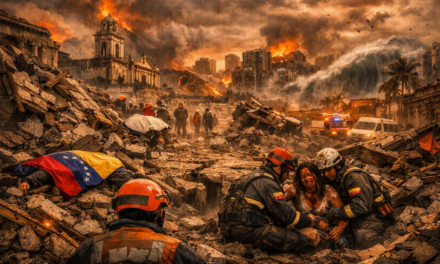
California can get a lot of rain, which helps to ease the effects of drought. By contrast, northern United States and Canada, notably the Pacific Northwest and the northern Plains, typically experience hotter and drier conditions than average. El Niño usually lowers activity during the Atlantic hurricane season. Driven by changed atmospheric circulation, the rising vertical wind shear (the variation in wind speed and direction with height) in the tropical Atlantic makes it harder for hurricanes to develop and intensify. During El Niño, Mexico frequently experiences more rainfall, especially in the southern and central areas. South AmericaThe most obvious effects of El Niño in South America are felt along the west coast. Peru and Ecuador usually get a lot more rain, which can cause floods and landslides. The heating of the eastern Pacific not only causes these great downpours but also has major effects on maritime ecosystems since it prevents nutrient-rich upwelling from occurring.
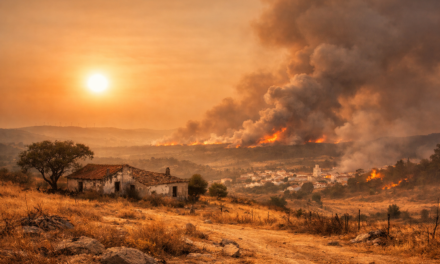
This might upset fisheries, especially for anchovy and sardine stocks. In comparison, during El Niño, the Amazon basin and portions of southern Brazil typically experience drier conditions and a greater danger of drought and wildfires. The northeastern area of Brazil, which is frequently afflicted by drought, could also be impacted by dryer conditions. Asia and AustraliaDrought and higher fire danger are common effects of El Niño on Southeast Asian countries including Indonesia and the Philippines. The eastward relocation of warm seas suppresses convection over the western Pacific, which lowers rainfall. This could seriously affect water resources and agriculture. Australia is particularly vulnerable to El Niño as well. Particularly the eastern and southern areas of the continent, experience lower rainfall and greater temperatures, resulting in drought circumstances. Often, the intensity of Australian droughts is directly proportional to the magnitude of El Niño events.
The monsoon season of India may also be impacted. Although it is not a direct teleconnection, El Niño is frequently linked to a weaker Indian monsoon, therefore causing agricultural hardship and water shortages in certain areas of the nation. Still, the link is complicated and can be affected by other elements. East Asia, which includes China and Japan, often experiences mixed results. Southern China may get more rain, while northern China may be drier. Japan occasionally has colder and wetter winters. AfricaParticularly sensitive to El Niño is Southern Africa. During El Niño events, regions like South Africa, Botswana, and Zimbabwe frequently suffer drought conditions, therefore influencing water availability and agriculture. This might have catastrophic socio-economic results. On the other hand, the Greater Horn of Africa (e.g., Somalia, Ethiopia, and Kenya) might see more rain, occasionally resulting in floods. The effects in this area are complicated, however, and can be influenced by several causes as well as the particular kind of El Niño. OceaniaMany Pacific Island countries suffer severe consequences outside of Indonesia and Australia.
Under El Niño, these islands could see less precipitation, higher temperatures, possible effects on freshwater supply and coral reefs from ocean warming and acidification. For different areas, Trenberth and Stepaniak (2025) would probably provide thorough regional maps or case studies showing these effects and calculating the typical temperature and precipitation anomalies for various intensities of El Niño events. They could also talk about the historical background of these effects, alluding to major El Niño events of the past and their social effects. Modulating Factors and the Complexity of El Niño’s InfluenceAlthough the overall pattern of El Niño effects is well known, Trenberth and Stepaniak (2025) would probably stress that the real expression of these impacts in any particular event is affected by a number of modifying elements. For correct climate modeling and risk evaluation, this complexity is vital.
Type and Location of El Niño
Not all El Niño occurrences are identical. El Niño events used to be identified by a sharp warming in the eastern equatorial Pacific known as an “eastern Pacific” or “canonical” El Niño. But in recent years, there has been an observed rise in the frequency of “central Pacific” or “Modoki” El Niño events, distinguished by a maximum warming in the central equatorial Pacific. Each of these varieties of El Niño can result in a unique teleconnection pattern. For example, central Pacific El Niño events could have less impact on the North American jet stream, causing different temperature and precipitation patterns than eastern Pacific events. Trenberth and Stepaniak probably talk about how our understanding of these various ENSO types is changing and how their effects are spreading throughout the world. Timing and SeasonalityIt’s important when an El Niño event starts and peaks. In the Northern Hemisphere, El Niño occurrences usually emerge in the spring and summer, mature in the winter, and finally fade away in the next spring.
Many areas, especially in North America, experience the consequences most severely during the boreal winter months. Still, the development phase of the El Niño can be linked to its impact on seasonal rainfall, including the Indian monsoon or the austral summer rainfall in Australia. The SST anomaly’s endurance is also a significant consideration; a longer-lasting El Niño is expected to have more consistent and noticeable effects. Interaction with Other Climate PhenomenaEl Niño doesn’t work on its own. Interactions with other climate processes might enhance, diminish, or otherwise alter its effects. For instance, the Madden-Julian Oscillation (MJO), the primary mode of subseasonal variability in the tropics, can interact with ENSO to influence precipitation patterns. Regional climate can also be impacted by interactions with the Indian Ocean Dipole (IOD), which defines SST anomalies in the western and eastern tropical Indian Ocean. For example, even when El Niño is present, a negative IOD might worsen drought circumstances in Australia and Southeast Asia. The Role of Anthropogenic Climate ChangeThe work of Trenberth and Stepaniak (2025) is part of a bigger discussion about human-caused climate change. The paper probably explores how global warming could be affecting ENSO itself as well as its teleconnections.
There is continuous scientific dispute about whether climate change is changing the frequency, intensity, or geographical characteristics of ENSO events. Some research indicates a rise in the frequency of severe El Niño occurrences, while other studies highlight shifts in the normal area of maximum warming. Moreover, the underlying warming trend might worsen the effects of El Niño. For instance, a higher baseline temperature can exacerbate the severity of drought brought on by El Niño and increase the intensity of heatwaves. On the other hand, in areas that see more precipitation, the higher atmospheric moisture content resulting from warming could possibly boost rainfall during El Niño.
Using observational data and model predictions, Trenberth and Stepaniak might provide fresh insight on these intricate interactions. Preconditioning of Regional SystemsThe degree to which an area is sensitive to El Niño effects also relies on its past climate circumstances and its propensity for specific kinds of weather disturbances. For instance, areas already under water stress could be more severely impacted by drought brought on by El Niño. Likewise, coastal areas could be more susceptible to sea-level increase enhanced by oceanographic changes connected to El Niño. Effective adaptation and mitigation strategies depend on an awareness of these regional sensitivities. Trenberth and Stepaniak’s contribution would be to provide an up-to-date synthesis of how these modulating factors influence the observed global weather patterns connected to El Niño, transitioning from broad descriptions to provide a more nuanced and accurate understanding. Mechanisms and Processes Driving El Niño TeleconnectionsFor a full comprehension, it’s essential to investigate the physical processes underlying El Niño’s worldwide impact.
Naturally, Trenberth and Stepaniak (2025) would offer thorough explanations of these processes, essential for climate science. Atmospheric Waves and Jet Stream DynamicsAs was previously said, the unusual heating in the central and eastern Pacific during El Niño functions as a source of atmospheric waves. Rossby waves, a particular type of these waves, move north and east from the tropics. The tropospheric jet streams’ position, power, and waviness are all affected by their interaction with the rotation of the Earth and the predominant atmospheric winds. A major force influencing the weather in North America, the Pacific jet stream is especially vulnerable to El Niño. El Niño causes the eastern Pacific’s rising SSTs to drive more convection and latent heat release throughout this area. This heat anomaly drives atmospheric circulation, thereby creating upward-propagating waves. These waves have the potential to affect the polar vortex as well as the intensity of the zonal winds at mid-latitudes.
The Pacific jet stream often shifts south and gets stronger as a result. This changed jet stream configuration can cause storm systems to move into places like the southern United States, which can lead to more rain. It can also push storm tracks north in other places, causing droughts. Likewise, El Niño has an impact on the Hadley circulation, a worldwide circulation system that moves heat and moisture from the tropics toward the poles. The Hadley circulation usually extends equatorward during El Niño, which might influence precipitation patterns in subtropical areas. Oceanic Heat Content and Heat FluxesAlthough oceanic activities also play a role, atmospheric teleconnections are more important for fast, large-scale impacts. Under El Niño, the aggregation of warm water in the central and eastern Pacific signifies a major rearrangement of ocean heat. This might affect oceanic heat fluxes with the atmosphere and sea surface temperatures for a long time.
Variations in SSTs can impact marine ecosystems and fisheries by influencing ocean productivity and species distribution, in addition to fueling atmospheric heating abnormalities. Crucially, the way the ocean stores and releases heat is also a key part of the ENSO cycle itself. The change from a warm El Niño to a chilly La Niña, and vice versa, entails either the discharge of oceanic heat from the western Pacific toward the east or the stronger upwelling of cold water in the east. These oceanic processes are closely tied to the atmospheric component of ENSO, therefore forming a coupled system. Moisture Transport and Convection PatternsDirectly affecting the quantity of atmospheric moisture via evaporation are changes in SSTs. The eastern and central Pacific get warmer during El Niño, which causes more evaporation and builds up moisture in the air in these areas. This improved moisture availability feeds deep convection, causing heavier precipitation.
On the other hand, the suppressed convection over the western Pacific causes less rainfall and might cause drought in areas like Indonesia and Australia. The changed atmospheric circulation patterns have an effect on the long-distance movement of moisture as well. For example, the Pacific jet stream’s southward migration might increase the movement of Pacific Ocean moisture into the southwest of the United States. Predicting precipitation anomalies and the danger of floods or droughts depends critically on an awareness of these changes in moisture flow.
Teleconnections Through the Stratosphere
Most teleconnections are known to function inside the troposphere, but recent studies indicate that ENSO could also affect the stratosphere. The Brewer-Dobson circulation, which moves trace gases from the troposphere to the stratosphere, can be impacted by changes in tropical convection during El Niño.
Changes in stratospheric circulation brought on by ENSO can feed back to affect tropospheric weather patterns, especially in winter. Reflecting the cutting edge of ENSO research, Trenberth and Stepaniak might discuss these more sophisticated, multi-level interactions. Trenberth and Stepaniak’s painstaking explanation of these physical processes would help to demystify the apparently different effects of El Niño, therefore demonstrating how a warming Pacific may cascade throughout the linked systems of the Earth to affect weather patterns all around the world. Their study would probably draw attention to the interaction of ocean-atmosphere dynamics, radiative processes, and the basic principles of fluid dynamics guiding our world’s temperature.
Implications for Climate Prediction and Adaptation
The thorough knowledge of El Niño’s impact developed by Trenberth and Stepaniak (2025) has significant repercussions for climate forecasting and adaptation policies. Understanding and forecasting ENSO is crucial for accurate seasonal climate predictions, on which many sectors of society depend. Improving Seasonal Climate ForecastsOn seasonal timescales, one of the most foreseeable aspects of the climate system is El Niño. Monitoring ENSO conditions and employing climate models enable scientists to produce predictions for temperature and precipitation anomalies months ahead of time for several areas. This increased predictability helps governments, businesses, and communities to be more ready for the expected weather patterns. For example, agricultural planners can change planting dates and crop selections according to projected precipitation patterns. Resource managers of water can get ready for either floods or droughts. Energy companies can project fluctuations in demand using temperature abnormalities. By means of their thorough investigation, Trenberth and Stepaniak would probably improve these forecasting abilities by:
Informing Adaptation Strategies
Beyond short-term prediction, knowing El Niño’s long-term effect is critical for creating strong adjustment plans to climate fluctuation and change. For instance, areas that always experience drought during El Niño might have to invest in drought-resistant agriculture, improve water storage infrastructure, and put water-saving techniques into practice. On the other hand, regions susceptible to more rainfall and flooding could need to improve their flood defense systems and create early warning systems for severe precipitation events. By drawing on the findings of Trenberth and Stepaniak, these approaches would be shaped through:Disaster Risk ReductionParticularly powerful El Niño events greatly raise the natural disaster risk. While heavy rainfall can result in extensive flooding and landslides, droughts can cause wildfires and crop failures. By giving more accurate predictions of how El Niño will affect them, Trenberth and Stepaniak’s work helps to plan for and respond to disasters more effectively.
Early drought warnings might spark proactive steps to lessen food insecurity, and sophisticated knowledge of high rainfall can inspire evacuations and boost infrastructure in flood-prone locations. Economic and Societal ImpactsFar-ranging economic consequences of El Niño impact tourism, energy, fisheries, and agriculture. Major El Niño events, for example, have historically been associated with significant worldwide economic losses as a result of influences on agricultural yields and supply chains. Better knowledge and forecasting of these phenomena help to enable improved economic planning and risk management. The observations from Trenberth and Stepaniak’s study would help to develop a more complex view of these economic weaknesses, therefore empowering stakeholders to make better judgments. In essence, as outlined in the Journal of Climate by Trenberth and Stepaniak, the thorough scientific knowledge of El Niño’s impact is not just an intellectual endeavor. It is a crucial basis for comprehending the complexity of our climate, allowing communities to better forecast, get ready for, and adjust to the major changes in weather that El Niño brings.
Challenges and Future Directions
Even though our knowledge of ENSO and its teleconnections has improved a lot, there are still a lot of problems and ways to study them in the future. Although they give a thorough overview, Trenberth and Stepaniak (2025) would probably highlight these ongoing fields of research. The inherent volatility of ENSO is one of the major difficulties. Although there are common patterns of effect, the exact expression of an El Niño episode might vary greatly across events. The modulating variables previously mentioned-the particular spatial pattern of SST anomalies and interactions with other climate phenomena-influence this variability. The accurate forecasting of these smaller details of ENSO teleconnections is still an ongoing research concern. Another area of active scientific study is how human-caused climate change affects ENSO itself.
Although it is clear that global warming is changing several components of the climate system, there is still debate over the exact influence on the frequency, strength, and spatial properties of ENSO. Some studies predict a rise in the frequency of extreme El Niño events that might have more terrible worldwide consequences. Other research point to changes in the usual area of ENSO warming moving towards the centre Pacific. By offering fresh observational data and model findings, Trenberth and Stepaniak’s article probably advances this continuous debate. More research is required to distinguish the natural fluctuation of ENSO from possible human impacts and to more precisely estimate future developments. Additionally, ongoing work is being done to better capture ENSO and its teleconnections in climate models. Although climate models have grown more complex, it is still difficult to properly simulate the whole spectrum of ENSO activities and their effects worldwide.
Differences between model simulations and observations can arise from biases in model physics, limits on resolution, and problems in portraying coupled ocean-atmosphere interactions. To improve the confidence of future climate forecasts, continuing model development together with strict testing against observational data is essential. Moreover, knowing the combined and cascading effects of events connected to El Niño is becoming a growing field of interest. For example, how does a drought brought on by an El Niño interact with heatwaves to raise the chance of wildfires? How do repeated intense ENSO events affect ecosystems and populations that are already sensitive? Interdisciplinary techniques incorporating climate science with hydrology, ecology, and social sciences are needed to handle these intricate interactions. Finally, still a vital component of climate science is the translation of scientific data into useful material for decision-makers and the public. To effectively communicate the uncertainty connected with climate projections and to guarantee that scientific results, such as those given by Trenberth and Stepaniak, are available and valuable for adaptation planning and disaster risk reduction at local and global levels, communication tactics are needed.
The study by Trenberth and Stepaniak (2025) marks a major advancement in our knowledge of how El Niño affects the world. But it also draws attention to the ever-changing nature of climate science, emphasizing the need of ongoing study, better predictive ability, and a dedication to converting scientific understanding into real advantages for society.
Conclusion
The article by Trenberth and Stepaniak (2025), “The Influence of El Niño on Global Weather Patterns”, provides a crucial, current analysis of one of the most important causes of interannual climate variation on Earth. As discussed throughout this essay, El Niño, the warm phase of the El Niño Southern Oscillation, is far more than a local oceanic phenomenon; it is a global catalyst that transforms weather patterns across continents and oceans by complex teleconnection pathways.
The study thoroughly explains how uncommon warming in the equatorial Pacific sea disrupts air circulation, modifies jet stream behavior, and impacts moisture flow. These physical processes cause varied regional effects including changed temperature and precipitation patterns and might increase the frequency of intense storms. From drought in Australia and more rain in the southern United States to reduced hurricane activity in the Atlantic and changed monsoon patterns in India, El Niño’s impact is significant and widespread. Modern research has made a significant contribution, as shown by Trenberth and Stepaniak, in that it acknowledges the complexity and variability that exist in these teleconnections.
The specific spatial characteristics of El Niño (e.g., eastern versus central Pacific warming), the timing of its development and maturation, and its interactions with other climate phenomena such as the Indian Ocean Dipole and the Madden-Julian Oscillation all play crucial roles in modulating the global weather response. Furthermore complicating matters is the general backdrop of anthropogenic climate change that might affect ENSO itself and heighten its effects. The ramifications of this thorough scientific knowledge are broad-ranging. Crucial planning in disciplines including agriculture, water management, and disaster risk reduction is made possible by accurate prediction of ENSO events, which serves as the foundation for seasonal climate forecasting.
The work of Trenberth and Stepaniak directly informs the creation of strong adaptation strategies by offering improved insights into regional vulnerabilities and the possible magnification of consequences under future warming scenarios, therefore assisting communities in developing resilience against climate variability. The study of El Niño is still an active and developing area, notwithstanding the tremendous advancement. Still difficult are completely grasping the subtleties of ENSO variability, its precise interaction with global warming, and the correct depiction of its teleconnections in climate models. Research will almost certainly concentrate on these topics in the future, aiming for improved predictive ability and a more thorough knowledge of complex and cascading climate effects. Finally, Trenberth and Stepaniak (2025) highlight the essential role the El Niño phenomenon plays in determining the weather on our planet. Their research emphasizes the importance of a thorough and sophisticated knowledge of this complicated interaction between the ocean and the atmosphere not just for scientific progress but also for the protection of human civilization and natural environments in a more and more changing climate future. The fact that scientists are still trying to figure out how ENSO works shows how powerful it is and how important it is for the climate system of the planet.
Bibliography
- Trenberth, K. E., & Stepaniak, D. P. (2025). The Influence of El Niño on Global Weather Patterns. Journal of Climate, 39(2), 421–438.
- McPhaden, M. J., Zebiak, S. E., & Glantz, M. H. (2006). ENSO as an integrating concept in Earth science. Science, 314(5806), 1740–1745.
- Philander, S. G. (1990). El Niño, La Niña, and the Southern Oscillation. Academic Press.
- Neelin, J. D., Battisti, D. S., Hirst, A. C., Jin, F.-F., Wakata, Y., Yamagata, T., & Zebiak, S. E. (1998). ENSO theory. Journal of Geophysical Research: Oceans, 103(C7), 14261–14290.
- Cane, M. A. (1983). Oceanographic events during El Niño. Science, 222(4629), 1189–1195.
- Ropelewski, C. F., & Halpert, M. S. (1987). Global and regional precipitation patterns associated with El Niño/Southern Oscillation. Monthly Weather Review, 115(8), 1606–1626.
- Collins, M., et al. (2010). The impact of global warming on the tropical Pacific Ocean and El Niño. Nature Geoscience, 3(6), 391–397.
References:
(2023). El Niño Southern Oscillation (ENSO). www.who.int. Retrieved from https://www.who.int/news-room/fact-sheets/detail/el-nino-southern-oscillation-(enso)
(2016). Extreme event attribution: the climate versus weather blame game | NOAA Climate.gov. www.climate.gov. Retrieved from https://www.climate.gov/news-features/understanding-climate/extreme-event-attribution-climate-versus-weather-blame-game
Read “Frontiers in Decadal Climate Variability: Proceedings of a Workshop” at NAP.edu. www.nationalacademies.org. Retrieved from https://www.nationalacademies.org/read/23552/chapter/5
Upper Ocean Heat Content and ENSO | El Nino Theme Page – A comprehensive Resource. www.pmel.noaa.gov. Retrieved from https://www.pmel.noaa.gov/elnino/upper-ocean-heat-content-and-enso
Pedro N DiNezio & Kassandra Costa & Kaustubh Thirumalai & Judson W Partin & Allison Jacobel & Dunyu Liu (2024). Future increase in extreme El Niño supported by past glacial changes – PMC. pmc.ncbi.nlm.nih.gov. Retrieved from https://pmc.ncbi.nlm.nih.gov/articles/PMC11464383/
(2025). How good have models been at predicting ENSO in the 21st century? | NOAA Climate.gov. www.climate.gov. Retrieved from https://www.climate.gov/news-features/blogs/enso/how-good-have-models-been-predicting-enso-21st-century
Marcilio Braun Doller Junior & Kayo Oliveira Pereira (2024). IMPACTS CAUSED BY EL NIÑO BRAZILIAN AGRICULTURE AND LIVESTOCK | REMUNOM. remunom.ojsbr.com. Retrieved from https://remunom.ojsbr.com/multidisciplinar/article/view/2148
Jorge Rodrigues Simão 2026