The European Union (EU) is not a static entity; it is best understood as a journey, a continuous process of integration and evolution that began in the ashes of World War II. This metaphor of a journey best illustrates the vibrant character of the EU, including its historical beginnings, the progressive growth of cooperation, the difficulties experienced, and the always present question of its future path. From its humble beginning as a small economic endeavor meant to avert future wars, the EU has grown into a sophisticated political and economic union having a sizable international impact. The complex character of the EU as a trip will be discussed in this article together with its historical trajectory, the conceptual foundations of its integration, the many routes of integration taken, the challenges and crises that have marked its path, and the ongoing debates determining its future. To see the EU as a journey, one must value the complex interaction of political will, economic need, shared values, and social changes that have propelled its growth throughout more than seven decades. It is a path distinguished by audacious advancements, periods of stagnation, and major setbacks, all adding to its distinct and often controversial nature.
I.The Beginning of the Road: Post-War Ambitions and First Steps
The European venture arose from a strong yearning for tranquilly and stability in a continent torn apart by two international wars. The catastrophic damage and the ideological divides that had caused these conflicts made it urgently necessary to find a new framework for global relations. The general feeling was that traditional inter-state conflicts, propelled by nationalistic enthusiasm and aggressive economic policies, had to be resolved. This understanding prepared the rich environment for revolutionary new approaches on interdependence and pooling of sovereignty.
A. The Shadow of War and the Search for Lasting Peace
The atrocities of World War II, including the Holocaust and the deliberate destruction of European towns and industries, had a lasting impact on the collective consciousness of the continent. In his 1946 Zurich speech, prominent leaders like Winston Churchill urged for “a sort of United States of Europe,” highlighting the need for reconciliation and collaboration among historic enemies, notably France and Germany. But this vision was about more than only avoiding war; it was also about rebuilding prosperity and building a defense against the growing ideological split of the Cold War. Although it was an American project, the Marshall Plan highlighted the need for economic reconstruction in Europe and suggested the advantages of coordinated reconstruction activities.
B. The Schuman Declaration and the Birth of a Coal and Steel Community
The Schuman Declaration of May 9, 1950, was the turning point in the official start of the European road trip. French Foreign Minister Robert Schuman suggested the declaration, which was greatly influenced by Jean Monnet. It called for the sharing of French and West German coal and steel output under a single High Authority. This was a purposefully realistic and incremental strategy. The founders hoped to make war between France and Germany “not merely unthinkable, but materially impossible” by putting coal and steel, the vital raw materials of war, under shared control. This was a significant break from past practices where sovereignty and strategic advantage depended on national ownership of major industries.
The selection of coal and steel was tactical. These sectors were essential to military strength and industrial output. By combining them, the founding countries sought to produce a tangible kind of interdependence that would link their interests and economies together. The immediate objective was to guarantee the economic recovery of West Germany and to incorporate it into the Western bloc, therefore inhibiting a rebirth of militarism and promoting economic stability. The Schuman Declaration paved the way for the Treaty of Paris, signed in 1951, which created the European Coal and Steel Community (ECSC).
C. The ECSC: A Pilot Project Providing the Integration Basis
The ECSC, with six founding members (Belgium, France, West Germany, Italy, Luxembourg, and the Netherlands), was the initial tangible step in the process of European integration. It was a bold experiment in supranational governance whereby organizations with actual authority to make decisions binding on member states were established. Novel organizations developed to run the shared market for coal and steel were the High Authority, the Council of Ministers, the Common Assembly, and the Court of Justice.
The ECSC’s success proved that supranationalism could work and sparked more integration efforts. By establishing a single market for these essential commodities, therefore promoting greater efficiency and lower costs, it stimulated economic development. More significantly, it set a precedent for conquering national opposition to shared governance in regions of perceived national interest. The ECSC showed how greater integration might be opened up by functional cooperation in a particular industry. It was a fruitful test program that offered insightful lessons for the next phases of the European path. The basic ideas of interdependence, supranationalism, and gradualism were all examined and improved under the ECSC system, paving the path for more aspirational projects.
II. Deepening the Path: The Treaties of Rome and the Establishment of the European Economic Community
Building on the success of the ECSC, the impetus for deeper integration persisted. The leaders understood that economic collaboration may go beyond particular industries to include larger economic goals, and that a common market was a strong vehicle for peace and prosperity. This guided the European adventure’s following important stage.
A. The unsuccessful European Defence Community and the shift to economics
The desire to go outside of economics ran into major difficulties. Proposed in 1954, the European Defence Community (EDC), aiming to form a shared European army, couldn’t get approved by the French National Assembly. This failure made clear the limits of political and military integration at that time and showed that although economic interdependence was growing, deeper political and military collaboration encountered more entrenched national sensitivities.
A vital lesson came from the EDC’s collapse. Particularly in the economic sector, where the advantages were more clear and the perceived dangers to national sovereignty were less severe, it supported the notion that slow, practical measures often produced more advancement in European integration. This change toward economics turned out to be a smart move, as it let the integration process pick up speed once more.
B. The Treaties of Rome: Establishing Euratom and the EEC
The Treaties of Rome were signed on March 25, 1957, as a result of the will to integrate further. Two fresh societies founded by these treaties are the European Economic Community (EEC) and the European Atomic Energy Community (Euratom). Particularly noteworthy was the EEC, which set out to build a comprehensive common market among the six member states.
The main aim of the EEC was to encourage economic development by setting up a customs union and by gradually bringing the economic policies of Member States into line. The formation of a customs union resulted in the abolition of quotas and tariffs among the member states as well as in the creation of a common external tariff for items brought in from non-member nations. This represented a major step in building a really unified economic area, promoting the free movement of commodities, services, money, and people.
Conversely, Euratom concentrated on fostering a peaceful nuclear energy sector, understanding its strategic relevance and the advantages of collaborative research and development. Although Euratom was significant, the EEC rapidly emerged as the main engine of the integration process given its more extensive economic ramifications.
C. Principles and Early Accomplishments of the Common Market
It was no easy task to set up the common market of the European Economic Community; it needed the removal of internal impediments and the harmonization of national laws. The road toward a totally operating common market consisted of a number of important steps. The progressive but methodical process was the abolition of customs taxes and import quotas. Essential for stopping trade diversion and guaranteeing that commodities from other nations encountered a consistent trade regime was the development of a common external tariff.
In addition to tariffs, the EEC aimed to dismantle non-tariff obstacles including disparate national norms, laws, and administrative practices. The idea of mutual recognition-where goods legally made and sold in one member state may be sold in another-became a crucial instrument in surmounting these impediments, though by a sometimes protracted legal process.
Early years of the EEC were marked by noteworthy economic expansion and rising intra-community commerce. The common market promoted economies of scale, motivated specialization, and fueled rivalry, hence enhancing efficiency and lowering consumer costs. One among the most important and divisive policies of the European Economic Community was the Common Agricultural Policy (CAP), founded in 1962. Though its goals were food security and a fair quality of life for farmers, it also resulted in surpluses and high prices, therefore underlining the difficulty of reconciling several national interests inside a shared framework. The EEC’s achievements in promoting economic convergence and improving quality of life provided a strong proof of the advantages of integration and propelled the growth of the Community.
III. Growing Horizons: Integration’s Enlargement and Deepening
The first integration’s success sparked membership enthusiasm among other European countries, resulting in a number of expansions changing the European project. At the same time, the trip showed increasing political aspiration by deepening integration in fields outside of simple economic cooperation.
A, The Winds of Change: Early Expansion
With the accession of Denmark, Ireland, and the United Kingdom in 1973, the first major expansion took place. This was a key step in changing the Community from a European entity from a continental center. Especially controversial and protracted was the UK’s accession, which reflected different ideas for the direction of Europe. Its admission, along with those of Scandinavian neighbor Denmark and the Republic of Ireland, marked the increasing appeal of the European project.
Greece (1981), and then Spain and Portugal (1986), joined the community during later expansions. These Southern expansion were essential because they brought together nations freshly freed from autocratic rule and contributed to solidifying their democratic changes. This showed how the European project, supported by shared democratic principles, was a political one as well as an economic one. Every expansion presented its own difficulties that called for changes to laws and institutions to welcome new members with various economic systems, political experiences, and legal customs.
B. The Single European Act: Towards a Really United Market
The constraints of the current systems grew clearer as the Community expanded. The establishment of the common market, especially the abolition of non-tariff restrictions, turned out to be a sluggish and difficult undertaking. Signed in 1986 and effective in 1987, the Single European Act (SEA) significantly advanced the internal market completion. For its complete implementation, it established a 1992 deadline.
The SEA was a thorough law meant to remove a number of impediments to the free flow of commodities, services, capital, and people. It more generally brought the idea of mutual recognition and enabled harmonization of laws where required. Furthermore boosting the European Parliament’s influence and broadening the Community’s remit into new fields including social policy and environmental protection increased the democratic legitimacy of the integration process. The SEA represented a major re-launch of the integration effort, advancing from the original concept of a customs union to a fully operational internal market.
C. The Wall’s Collapse and the Start of a New Period
The dissolution of communism in Eastern Europe following the fall of the Berlin Wall in 1989 fundamentally changed the geopolitical terrain of Europe and handed the EU previously unheard-of possibilities and difficulties. This occurrence was a watershed moment that established a historical need for more expansion and integration. The possibility of bringing a fractured continent back together became a major motivator.
Although a historic event, Germany’s reunification in 1990 created major socioeconomic problems for both Germany and the larger EU. The incorporation of the Federal Republic of the former East Germany called for sizable financial transfers and readjustments. More generally, the demise of communism cleared the road for the possible accession of ex-Eastern Bloc nations, hence changing the European adventure into a continental enterprise. This age brought with it significant geopolitical realignment and a rebirth of ambition.
IV. The Maastricht Moment and the Change Into the European Union
The quick rate of change after the collapse of the Berlin Wall together with growing complexity of economic and political integration called for a fundamental reconsideration and extension of the European project. This resulted in the historic Maastricht Treaty.
A.Towards Political Union: The Treaty of Maastricht
A watershed event was the Treaty on European Union, signed in Maastricht in February 1992 and becoming operative in November 1993. Building on the already existing European Communities, it officially founded the European Union (EU) and greatly broadened their purview. The treaty brought in the idea of “three pillars”:
- Retaining their supranational character, the first pillar consisted in the European Communities (EEC, ECSC, Euratom).
- The second pillar created a Common Foreign and Security Policy (CFSP) to allow the EU to act in unity on the global stage.
- Cooperation in Justice and Home Affairs (JHA) was introduced in the third pillar to tackle problems including immigration, asylum, and cross-border crime.
Crucially, the Maastricht Treaty set the stage for Economic and Monetary Union (EMU), aiming for a single currency. It defined convergence criteria that member states had to fulfill in order to qualify for the euro, a process that would take years to carry out. The pact also established the idea of EU citizenship, therefore bestowing more rights upon citizens of member states, including the freedom to migrate and live inside the Union as well as the entitlement to vote and run as a candidate in European Parliament and municipal elections in their place of residence.
B.The Euro: A Symbol of Deep Integration and Its Difficulties
Arguably, the most ambitious and transformative undertaking started by the Maastricht Treaty was the adoption of the euro as a single currency. The scheme was to establish one monetary policy controlled by the European Central Bank (ECB) to promote price stability and stimulate trade and investment throughout the Eurozone. In 2002, the euro was physically introduced, taking the place of national currencies in 12 member countries (the original Eurozone members).
The euro has clearly lowered transaction expenses and exchange rate hazards for businesses, improved price transparency, and fostered more economic integration among other major advantages. It has also raised the EU’s global economic clout. Nonetheless, the euro’s road has been marked by difficulties as well. The sovereign debt catastrophe exploding in the late 2000s showed the structural flaws of the Eurozone, especially the variation in economic performance and fiscal rules across member states. A great weakness turned out to be the lack of a full fiscal union, meaning no centralised budget or large fiscal transfers to cushion economic shocks. The crisis made it clear that for an economic and monetary union to last, there must be a lot of political and financial cooperation.
C. Further Intensification and Diversity: Amsterdam and Nice
With later treaties, the integration process carried on. Signed in 1997 and in effect in 1999, the Treaty of Amsterdam strengthened and simplified the authority of the European Union, especially in matters of justice and home affairs, therefore rendering them more supranational. It also improved clauses pertaining to employment, social welfare, and equal possibilities.
Primarily an institutional change pact intended to get the EU ready for the accession of ten new member states in 2004, the Treaty of Nice was signed in 2001 and came into effect in 2003. It strived to guarantee that the institutions of the EU could operate efficiently with a substantially higher membership. Important changes included those to the makeup and voting weights of the Council of the European Union and the European Commission. Some, however, argued that the Nice Treaty did not go far enough in changing the way the EU makes decisions, which led to demands for more institutional reform.
V.Navigating the Storms: European Adventure Crises and Obstacles
The path of the EU has not been a seamless one; rather, it has been marked by major crises testing the integration project’s resilience and flexibility. These difficulties have frequently pushed the EU to face its constraints and to change itself.
A.The Constitutional Conundrum and the Comeback to Pragmatism
Following the expansion to the east, there was a clear need for a more coherent and overarching legislative framework for the Union. A Convention on the Future of Europe wrote a complete treaty that set up a Constitution for Europe. Simplifying current treaties, explaining the division of powers, improving the part of the European Parliament, and establishing the post of EU Foreign Minister were among the goals of this bold document.
But the suggested Constitution drew severe opposition. Referendums in France and the Netherlands rejected the treaty in 2005. These rejections came from a complicated combination of public worries about national sovereignty, the speed of integration, and economic不安, indicating a less enthusiastic public attitude towards further deep integration via a single constitutional document. This represented a major setback for the champions of a more federal Europe. The EU answered by abandoning the constitutional project in favor of a more realistic one.
B. The Lisbon Treaty: A Revised Route Ahead
The Treaty of Lisbon, signed in 2007 and taking effect in 2009, was a response to the constitutional failure. Many of the significant revisions suggested in the constitutional treaty were included in the Lisbon Treaty, but instead of one constitution, they were given as a series of revisions to already in place treaties. Important changes consisted in:
- Enhancing the European Parliament’s role by granting it co-decision authority across nearly all legislative domains.
- Establishing the offices of High Representative of the Union for Foreign Affairs and Security Policy and President of the European Council.
- Making the Charter of Fundamental Rights legally binding.
- Presenting a citizens’ initiative whereby people might ask the European Commission to propose legislation.
- Increasing qualified majority voting in the Council to streamline decision-making.
In its foreign policy, the Lisbon Treaty sought to improve the EU’s democracy, efficiency, and efficacy. Although it lacked the same symbolic punch as the rejected constitution, it marked a major advancement in changing the EU’s governance and equipping it for the difficulties of the twenty-first century.
C. The Sovereign Debt Crisis: A Trial of Eurozone Resiliency
The Eurozone was greatly and protracted affected by the 2008 global financial crisis. Particularly Greece, Ireland, Portugal, Spain, and Cyprus were among the several member states that experienced major financial problems that resulted in a sovereign debt crisis. This crisis showed how unstable a monetary union is exposed without a fiscal union and a strong crisis management system.
The EU and the European Central Bank (ECB) reacted with a set of unprecedented steps, including financial rescue packages, austerity measures, and the development of new financial stability mechanisms including the European Stability Mechanism (ESM). The crisis sparked fierce arguments regarding the future of the euro and the necessity of increased economic cooperation, budgetary restraint, and banking union. It underlined the clear tensions between national sovereignty and the collective responsibility needed for a solid monetary union. The crisis made clear that the European road is not simply about harmonizing laws but also about navigating many economic realities and political preferences.
D. The Migration Crisis and the Challenge to Solidarity
In 2015, Europe saw a large inflow of refugees and migrants, mostly from Syria, Afghanistan, and sub-Saharan Africa, fleeing conflict, persecution, and poverty. This caused a political dispute and a humanitarian disaster that jeopardised both the EU’s internal unity and its outside borders control.
The crisis revealed major differences between member countries concerning asylum laws, border controls, and burden-sharing policies. As some nations momentarily reinstated internal border controls, the Schengen Area, a key component of free movement, came under strain. The EU battled to formulate a coordinated and effective reaction, therefore underscoring the difficulties in reconciling national immigration and asylum policies, which remain extremely sensitive domestic issues. The migration issue brought up basic issues regarding the ideals of the EU, its capacity to act in concert, and its relationship with its neighbors.
E. Brexit: The Development of Disintegration?
The first instance of a member state voluntarily leaving the European Union was the United Kingdom’s choice to do so, which was made official on January 31, 2020, following a referendum in 2016. Brexit represented a significant event defying the story of unbroken and permanent integration defining the EU for decades.
The vote for Brexit was motivated by a complex mix of issues, such as worries about sovereignty, immigration, economic integration, and the perceived democratic shortfall of the EU. The ensuing talks on the departure of the UK and the building of a new relationship between the EU and the UK were protracted and difficult, highlighting the strong interdependence that had grown over decades. Brexit compelled the EU to face its internal conflicts and to reaffirm its loyalty to the other 27 member states. It also led to a rethinking of the appeal and future course of the EU itself, which sparked debates over how to better engage people and solve their worries.
VI.Drawing the Future: The Continuous Transformation of the European Project
The European Union is still moving along, but it will have to deal with new problems and chances that will change its course in the future. The continuous change is distinguished by a continuous rebalancing of intergovernmentalism and supranationalism, the quest of strategic independence, and the reaction to new global events.
A. Strategic Autonomy and Global Role
The EU has progressively stressed the idea of “strategic autonomy” in a world that is becoming more and more multipolar and unstable. This describes the EU’s goal of acting as a more autonomous and competent player on the international scene, able to defend its interests and uphold its principles free from excessive reliance on other countries. This aspiration covers defense, commerce, technology, and supply chains among other spheres.
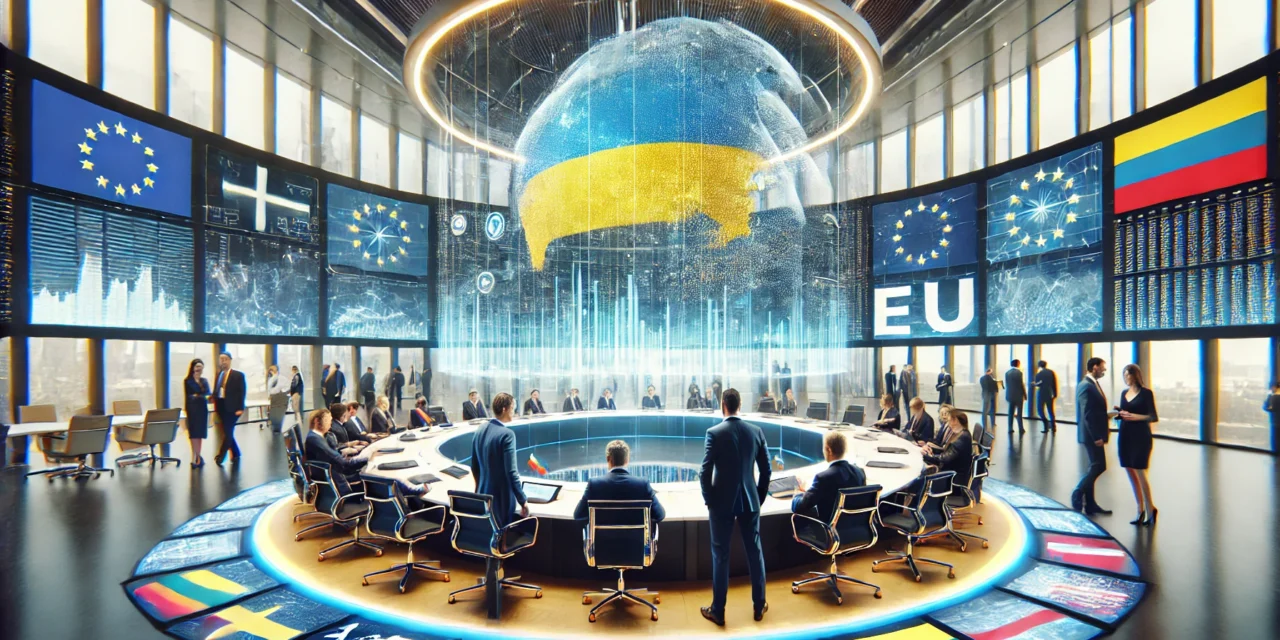
The war in Ukraine has significantly hastened this drive for strategic autonomy, emphasizing the need for more energy independence and European defense collaboration. The EU has raised its defense spending, coordinated its aid to Ukraine, and aimed to lessen its dependency on Russian energy. This refocus on strategic autonomy indicates a change toward a more assertive and self-reliant EU able to control its own destiny and more effectively advance world peace and stability.
B. Digital Transformation and Green Transition
The green transition and the digital transformation are two significant change programs leading the EU’s path. Launched in 2019, the European Green Deal seeks to make the EU climate-neutral by 2050 by changing its economy and society to support sustainable development. Massive expenditures in renewable energy, energy efficiency, sustainable transportation, and circular economy ideas are part of this. The difficulty is in ensuring an equitable transformation that leaves nobody behind and in coordinating activities among member countries with different financial resources.
The EU is simultaneously implementing a digital plan to advance digital sovereignty, competitiveness, and innovation. This covers investments in artificial intelligence, cybersecurity, digital infrastructure, and the expansion of a data economy. The EU wants to control digital platforms as well as guarantee fair competition and defend the right to privacy for its citizens’ data. Although both of these changes provide great chances for development and modernism, they also provide intricate difficulties with regard to finance, regulation, and societal acceptability.
C. The Future of Neighbourhood Policy and Enlargement
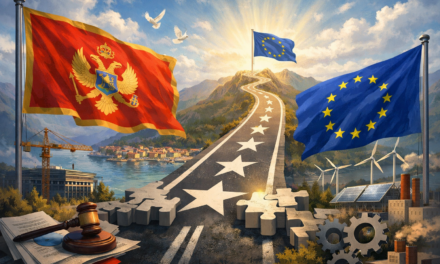
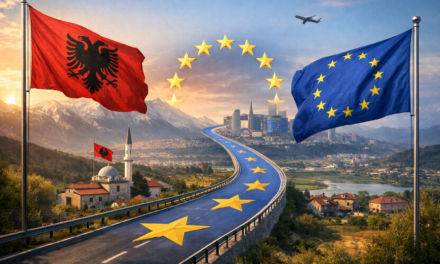
The battle in Ukraine has started conversations about whether the EU should grow even more. Ukraine, Moldova, and a number of Western Balkan nations have shown great desire to join the EU, and the Union has given them candidate status. For advancing stability, democracy, and economic development in Europe’s vicinity, enlargement is still a potent foreign policy tool.
But the expansion process is complicated and calls for major changes and preparations from the candidate countries. Internal improvements inside the EU are also needed to guarantee that its institutions can properly handle fresh members. The neighborhood policy of the EU is also changing. It wants to build better relationships with its neighbors and deal with problems that affect both sides, like migration, energy security, and economic development. A crucial indicator of the EU’s geopolitical role and long-term stability will be the direction of enlargement and neighborhood policy.
D.Deepening Democracy and Increasing Citizen Participation
The conflict between supranational governance and national democratic responsibility has been a recurring issue in the EU’s development. Efforts to close the apparent democratic deficit have resulted in more authority for the European Parliament and projects including the European Citizens’ Initiative. However, the EU frequently finds it difficult to connect with its populace due to difficulties with legitimacy and public confidence.
The future of the EU will most likely rely on its capacity to promote more public involvement and to highlight the concrete advantages of integration in the life of its citizens. This calls for public involvement as well as openness, sensitivity to public worries, and strong communication in addition to good policy making. The current discussions regarding the Conference on the Future of Europe mirror a constant endeavor to include people in determining the course of the EU and to create a more democratic and inclusive Union.
Conclusion
The history of the European Union is a continuous story of resiliency, adaptation, and ambition. It is evidence of the continuing conviction that even among historically hostile countries, cooperation may help to create shared prosperity and peace. Driven by a complicated interaction of economic imperatives, political ambitions, and societal changes, the EU has changed throughout time from its modest beginnings as a post-war initiative to its current role as a significant worldwide player. The metaphor of a journey well portrays this dynamic process, including its historical beginnings, the progressive integration via important treaties, the difficulties of enlargement, and the many crises that have tested its cohesiveness and resilience.
The road has been marked by notable successes, such as the establishment of the biggest single market worldwide, the adoption of a common currency, and the strengthening of democracy and human rights across a continent formerly torn apart by conflict and ideology. Still, it has been marked by great difficulties including economic downturns, sovereign debt crises, migration issues, and the substantial symbolic blow of Brexit. Though terrible, these catastrophes have sometimes been catalysts for change, driving the EU to reevaluate its policies, reinforce its institutions, and redefine its goals.
The route of the EU keeps developing as it negotiates the difficulties of the twenty-first century. Its future course is being molded by the quest for strategic autonomy, acceptance of the green and digital changes, and the changing dynamics of enlargement and neighborhood policy. The EU’s capacity to strike a balance among the interests of its many member states, to react well to world events, and, most critically, to keep the trust and involvement of its people will determine how successful this continuous process turns out. Though frequently put to the test, the European initiative is still a strong example of supranational collaboration, proof of the conviction that a shared future founded on common principles and mutual interdependence is not only possible but also essential for peace and prosperity in a more and more interconnected world. The path is still far from done; its next chapters will surely be created by ongoing adaptation, invention, and a relentless devotion to the values that originally drove its development.
Bibliography
- European Union. (2024). The EU in Brief. Publications Office of the European Union.
- Dinan, D. (2014). Origins and Evolution of the European Union (2nd ed.). Oxford University Press.
- Nugent, N. (2017). The Government and Politics of the European Union (8th ed.). Palgrave Macmillan.
- Moravcsik, A. (1998). The Choice for Europe: Social Purpose and State Power from Messina to Maastricht. Cornell University Press.
- Wallace, H., Pollack, M., & Young, A. (Eds.). (2020). Policy-Making in the European Union (8th ed.). Oxford University Press.
- Bickerton, C. (2012). European Integration: From Nation-States to Member States. Oxford University Press.
- Judt, T. (2005). Postwar: A History of Europe Since 1945. Penguin Books.
- Schimmelfennig, F., & Sedelmeier, U. (Eds.). (2005). The Politics of European Union Enlargement. Routledge.
- Zielonka, J. (2006). Europe as Empire: The Nature of the Enlarged European Union. Oxford University Press.
- Menon, A., & Weatherill, S. (2002). The European Union: A Very Short Introduction. Oxford University Press.
References:
(2025). EU enlargement and integration: Voices of support and scepticism | European Union Institute for Security Studies. www.iss.europa.eu. Retrieved from https://www.iss.europa.eu/publications/briefs/eu-enlargement-and-integration-voices-support-and-scepticism
carnegieendowment.org. Retrieved from https://carnegieendowment.org/research/2022/04/making-eu-foreign-policy-fit-for-a-geopolitical-world
Mircea Diavor. Analysis of the Impact of EU Membership on GDP Growth: An Approach Based on the Differences in Differences Econometric Model | REJ – Romanian Economic Journal. rejournal.eu. Retrieved from https://rejournal.eu/article/analysis-impact-eu-membership-gdp-growth-approach-based-differences-differences-econometric
V Prikhodko (2022). Brexit’s Implications for the Transatlantic Relationship – PMC. pmc.ncbi.nlm.nih.gov. Retrieved from https://pmc.ncbi.nlm.nih.gov/articles/PMC9244525/
Andrew Duff (2023). Five Surgical Strikes on the Treaties of the European Union | European Papers. www.europeanpapers.eu. Retrieved from https://www.europeanpapers.eu/en/europeanforum/five-surgical-strikes-on-treaties-of-european-union
Jorge Rodrigues Simão