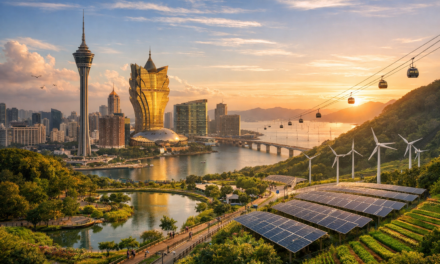
Driven by fast technological developments, the global tourism scene is changing dramatically. This change is a basic change in how destinations are experienced, handled, and advertised rather than simply the invention of new devices. The idea of smart tourism is at the forefront of this digital revolution since it uses modern technologies to improve sustainability, efficiency, and the general visitor experience. Macau, a Special Administrative Region of China with a distinct mix of Portuguese and Chinese legacy and a worldwide reputation as a vivid entertainment and gaming center, finds itself at a turning point in adopting and merging smart tourist technologies. A thorough examination into the possibility and practical uses of smart tourism is required given the city’s current infrastructure, varied tourist demographics, and strategic goals for economic expansion outside of gaming. This essay will offer a thorough and academic investigation of Macau’s smart tourism technologies, looking at the current state, identifying important technological enablers, examining their impact on various aspects of the travel ecosystem, addressing obstacles and possibilities, and offering a forward-looking viewpoint on Macau’s path to become a truly smart tourism destination.
The Evolving Paradigm of Smart Tourism
Smart tourism marks a change in approach from conventional tourism patterns by emphasizing data-driven decision making, smooth integration of services, and customisation of experiences. Fundamentally, it’s about using information and communication technologies (ICTs) to build smart environments that meet the demands of visitors and the operational needs of destinations. This calls for a sophisticated interaction among linked systems including the Internet of Things (IoT), big data analytics, artificial intelligence (AI), virtual and augmented reality (VR/AR), cloud computing, and mobile technologies. The ultimate objectives are to maximize resource management, raise visitor happiness, stimulate economic development, and advance environmental sustainability.
The idea of smart tourism is based on a number of fundamental principles. First, it stresses connectivity, ensuring that everyone, including tourists, service providers, and government organizations, is digitally connected. This connection improves real-time information flow, therefore allowing improved coordination and responsiveness. Second, it uses intelligence that comes from gathering, crunching, and making sense of a lot of data produced by many touchpoints. Crucial roles in deriving insightful analysis from this data are played by artificial intelligence and machine learning, which enable predictive modeling, customized recommendations, and improved operations. Third, smart tourism seeks integration, therefore dismantling departmental divisions among many tourism services and systems. This implies that booking websites, transit networks, lodging suppliers, attractions, and local companies should ideally cooperate in a coherent way to provide the visitor a hassle-free experience. At last, personalization is a key result whereby technology allows the customising of travel itineraries, recommendations, and services to individual tastes and conduct, therefore boosting involvement and happiness.
Early acceptance of digital technology in the travel sector, like internet travel agencies (OTAs) and e-tickets, may help one to track the development of smart tourism. But the birth of mobile devices and the expansion of sensors have sped up this change, therefore allowing more dynamic and immersive experiences. The COVID-19 epidemic highlighted the need of digital solutions even more, hence accelerating the use of contactless technologies, virtual tours, and digital health passes. As the travel sector recovers and adjusts, the focus on smart tourism is projected to grow, with destinations working to be more resilient, sustainable, and visitor-centric.
Macau’s Tourism Landscape: A Unique Context
The tourism sector of Macau is defined by its own historical development, its financial reliance on gaming, and its goals for diversification. For decades, the SAR has attracted gamblers from all over the world, and its tourism infrastructure has mainly been built to serve this main market. This has led to a focus on large integrated resorts, cutting-edge entertainment complexes, and a thriving hospitality industry. Recent years have seen a concerted effort, however, to diversify Macau’s appeal, draw a wider spectrum of visitors, including those with an interest in its cultural legacy, culinary scene, and MICE (Meetings, Incentives, Conferences, and Exhibitions) prospects.
From historic Portuguese colonial buildings and UNESCO World Heritage monuments to colorful Chinese temples and traditional festivals, the city’s dual legacy as a former Portuguese colony and a Special Administrative Region of China offers a rich tapestry of cultural attractions. This cultural component provides a great chance for the advancement of smart tourism by enabling the development of immersive and educational experiences that go beyond the flashiness of the casinos. Moreover, Macau is well-positioned for better regional integration and higher tourist numbers because of its strategic location inside the Greater Bay Area (GBA), a region including the two Special Administrative Regions (SARs) of Hong Kong and Macau and nine cities in Guangdong Province.
But there are also big obstacles for the tourism industry in Macau. The great reliance on the gaming sector exposes it to governmental shifts and economic volatility. To guarantee long-term stability and resilience, there is an urgent need for economic diversification. Moreover, though World-class in many respects, the current tourism infrastructure frequently runs in a fragmented way, with little interoperability among other service providers. Though frequently opulent, the visitor experience might occasionally lack customization and a close relationship with the local way of life. Tackling these obstacles calls for a strategic and thorough approach to deploying smart tourism technologies that increase productivity, draw new market sectors, and advance a more inclusive and environmentally friendly tourist environment.
Key Smart Tourism Technologies and Their Applications in Macau
The successful introduction of smart tourism in Macau depends on the skillful application of several cutting-edge technologies. Every one of these technologies provides unique features that may meet particular demands and possibilities inside the Macau tourist setting.
5G Network Infrastructure
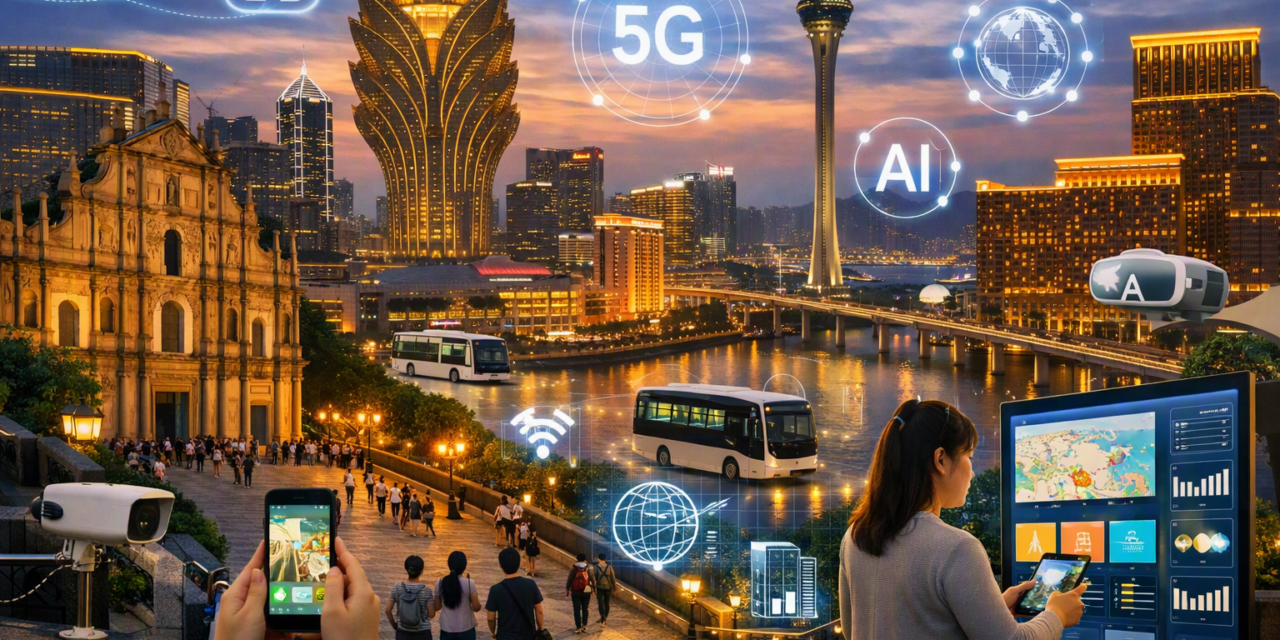
Many smart tourism applications depend on the extensive use of 5G technology. 5G’s much faster speeds, lower latency, and higher capacity than earlier mobile networks allow for a smooth flow of data, which is essential for real-time applications. For Macau, a strong 5G network can provide improved mobile broadband experiences for visitors, enabling high-definition video streaming, lag-free augmented reality overlays, and rapid information access. Moreover, smart destination management depends on the deployment of IoT devices, for which 5G is absolutely essential. It makes it possible to monitor traffic, public transportation, environmental circumstances, and the state of tourism facilities in real time. For instance, smart sensors placed all around historical sites can give visitors real-time data on how crowded it is via their mobile devices, enabling them to better plan their trips. In a similar vein, 5G-powered real-time public transportation tracking and smart parking systems will greatly lower visitor irritation and raise urban mobility. The low latency of 5G also makes it possible to have advanced applications like VR experiences that feel like they are happening in real time and robots that can be controlled from a distance for cleaning or security in tourist areas.
Internet of Things (IoT)
The Internet of Things (IoT) is a network of physical objects, vehicles, structures, and other things embedded with sensors, software, and network connections that let them gather and share data. IoT can change several facets of the visitor experience and destination management in the setting of Macau’s tourism. Smart bins that indicate when they are full can help improve waste collection routes, hence promoting a more hygienic city. To increase safety and conserve energy, smart streetlights can change their brightness according to the ambient light and pedestrian traffic. In hotels, IoT devices can allow for tailored room settings upon guest arrival, such as pre-set temperatures and lighting choices. By doing away with the need for physical keys, smart access systems improve convenience and security. IoT sensors may track visitor flow and queue levels for attractions, giving guests real-time updates and allowing attraction operators to manage crowds more effectively. IoT can enable tailored promotions in the retail industry depending on a customer’s location inside a retail complex or their past buying patterns.
One important use of IoT in Macau might be found in the preservation of its extensive cultural legacy. Sensors built into historic buildings can keep an eye on things like humidity and temperature in the environment, which can help keep these important buildings safe. When a visitor’s mobile device scans smart signage, it can deliver dynamic information about historical locations together with multilingual content, interactive maps, and augmented reality overlays. Imagine a tourist standing in front of the Ruins of St. Paul’s and, using their smartphone, seeing a 3D reconstruction of the original façade or information about its historical significance appear on their screen, all facilitated by IoT beacons and a robust network.
Big Data Analytics and Artificial Intelligence (AI)
Big data analytics looks through huge and diverse datasets to find insights, correlations, and patterns that were not clear before. In turn, AI uses these insights to allow machines to execute operations that normally need human intelligence, including learning, problem solving, and decision making. Combining artificial intelligence with big data provides a lot of possibilities for the travel industry in Macau. Macau may acquire a better knowledge of visitor behavior, preferences, and trends by gathering and examining information from several sources including booking sites, social media, sensor networks, and visitor comments.
Based on individual visitor profiles, historical data, and real-time location, artificial intelligence powered recommendation engines can provide customized recommendations for attractions, restaurants, and activities. This goes from general travel ideas to hyper customised experiences. For instance, an artificial intelligence system may advise a visitor who has shown an interest in cultural experiences and is presently in a less populated area a quiet, traditional teahouse; meanwhile, it would suggest a vibrant seafood restaurant to another who has been exploring the waterfront and has previously indicated a preference for seafood.
Demand forecasting is another area where artificial intelligence may be used in predictive analytics to improve resource allocation for transportation, housing, and staffing. AI-powered chatbots and virtual assistants can provide 24/7 client support by responding to questions, helping with reservations, and offering travel advice in several languages, therefore improving accessibility and efficiency greatly. Regarding destination management, artificial intelligence may evaluate traffic patterns to maximize public transportation routes and timetables and track social media attitude to spot possible problems or chances for growth. For example, artificial intelligence might assist government determine crowd counts and modify security and logistical preparations appropriately if social media data shows an increase in interest in a certain event.
AI may also be used for sentiment analysis of internet evaluations and social media comments, therefore providing useful input to companies and destination management organizations (DMOs) to enhance services and proactively solve consumer complaints. Dynamic pricing systems for hotels and attractions can also use machine learning algorithms to maximize income while yet providing visitors with reasonable prices.
Virtual Reality (VR) and Augmented Reality (AR)
AR overlays digital data onto the actual world, whereas VR surrounds consumers in a totally simulated surroundings. Both systems present intriguing opportunities to improve the travel experience in Macau.
Virtual pre-travel experiences created with VR can let prospective visitors investigate resorts, casinos, sites, and even entire neighborhoods of Macau prior to their arrival. This could greatly affect booking choices and help to set reasonable expectations. For individuals who cannot move or have restricted mobility, virtual tours of historical sites with 360 degree views and interactive features can be an entertaining and accessible way to experience Macau’s legacy. Inside resorts, virtual reality can also be utilized for immersive entertainment experiences that provide virtual adventures or simulated casino games.
By adding digital content over the physical world, augmented reality improves the visitor experience on site. Imagine tourists exploring the historic Senado Square, using their smartphones or AR glasses to view historical reconstructions of buildings that no longer exist, or to access detailed information about architectural styles and historical events as they aim their devices at various landmarks. AR applications may offer interactive maps stressing sites of interest, directions to secret treasures, or even gamified experiences whereby users may gather virtual artifacts or solve challenges connected to Macau’s past and culture. AR can make displays come to life in museums by superimposing animations or additional material over artifacts. AR menus may show cuisine in three dimensions together with components and allergy information for dining. Combining AR with Macau’s cultural legacy sites might turn them from unchanging monuments into vibrant, engaging learning settings.
Mobile Technologies and Applications
Most tourists engage with smart tourism services via mobile devices. Therefore, it is essential to create thorough, user-friendly mobile apps. Macau might create one “Macau Smart Tourism App” incorporating several services and data. This app might act as a focal point for:
Beyond one application, crucial is the city-wide and public transportation system-spanning ubiquitous high-speed Wi Fi availability. Integrated into mobile apps or wearables, contactless payment methods will increase convenience and cleanliness. Beacon technology can be installed in important tourist locations to deliver focused information and discounts to visitors’ cellphones as they approach certain spots.
Data Integration and Open Data Platforms
A really intelligent location needs flawless data flow among many parties and sharing. This calls for destroying data silos and building platforms for data integration and open data projects as fit. Macau’s DMO, hotels, transportation providers, and government agencies should cooperate to establish a single data ecosystem. Developing shared data standards and APIs (Application Programming Interfaces) enabling several systems to interact could be part of this.
A platform for open data, where anonymized and collected data is made openly accessible, can stimulate innovation and enable independent developers to develop new applications and services that boost the local economy and benefit tourists. For instance, while businesses could create creative trip planning tools or local experience platforms, academics might utilize open data on visitor flows to better grasp tourism trends. In any data integration project, data security and privacy are absolutely essential. Sensitive data should be safeguarded by strong mechanisms in accordance with pertinent rules.
Impact of Smart Tourism Technologies on Macau’s Tourism Ecosystem
The effective use of smart tourism technology will have a significant and complex influence on Macau’s tourism environment impacting tourists, companies, destination management, and the local population.
Enhanced Visitor Experience and Satisfaction
The most obvious advantage of smart tourism is a notable improvement in the visitor experience. Key determinants of satisfaction are personalisation, convenience, and immersion. AI-powered recommendations and augmented reality-enabled exploration let visitors explore Macau in a manner customized to their preferences, resulting in more memorable and engaging visits. Seamless booking systems, contactless payments, and effective navigation lower friction and tension, enabling visitors to concentrate on taking pleasure in their time in the city. Having access to real-time information about queues, transportation, and events enables visitors to make wise decisions and maximize their itineraries. For cultural visitors, augmented reality and other technologies can turn historical sites into interactive learning experiences that encourage a greater understanding of Macau’s distinct past and present.
Increased Operational Efficiency and Sustainability
Destination management and the operational effectiveness of tourism companies are much improved by intelligent tourism technologies. In hotels, IoT sensors can enhance waste management and maximise resource use, such as water and energy. Predictive analytics can enable companies to better control staffing levels and estimate demand for services. Big data analytics provides data-driven insights that can guide strategic decision-making, helping DMOs to effectively distribute marketing funds, spot new market trends, and design customized tourist offers.
From a sustainability angle, smart technologies have the potential to make the tourist industry more environmentally friendly. Better transit routes lower emissions and fuel consumption. Using smart building technologies at hotels and resorts will help to save energy. By using real-time data to better manage crowds, overtourism in vulnerable areas can be avoided, therefore safeguarding the environment and the local people’s quality of life. For instance, knowing visitor flow patterns enables authorities to guide visitors to less congested locations or encourage off-peak travel, therefore lowering the environmental effect of concentrated tourism activity.
Economic Diversification and Competitiveness
By improving the appeal and competitiveness of Macau as a travel destination, smart tourism technologies can significantly contribute to economic diversification projects. A more complex and alluring tourism package going beyond gaming may draw a broader spectrum of local and foreign tourists, such as business travelers, culture aficionados, and families. This diversification can lessen Macau’s dependency on the gaming industry, therefore strengthening the stability of its economy in the face of outside shocks.
Adoption and expansion of smart tourism technologies could also encourage invention and generate fresh business prospects inside the IT industry. Developing unique tourism applications, data analytics services, or VR/AR content can help local businesses to support an expanding knowledge economy. Macau may become the top smart tourism destination in Asia, drawing in talent and money. Moreover, enhanced efficiency and visitor pleasure might result in greater tourism expenditure and a greater contribution of tourism to the total GDP. Additionally increasing income streams and supporting the diversification plan is the capacity to more efficiently host and manage large scale MICE events through intelligent technologies.
Improved Destination Management and Governance
For the Macau government and DMO, smart tourism offers great instruments for successful destination administration and governance. Real-time information on visitor counts, demographics, and behavior can guide policy choices, city design, and resource management. For example, information on where visitors spend their time and how they travel around the city might help to direct changes in public services and transportation.
Through real-time monitoring and quick response systems, smart technologies can also improve security and safety in tourist locations. Maintaining public order and guaranteeing visitor safety depend critically on the capacity to successfully handle crowds, particularly during significant events. Moreover, open data projects and transparent data sharing can promote public, corporate, and governmental cooperation, resulting in more inclusive and responsive governance. Using data analytics might also help one to grasp how travel affects local populations, hence enabling the creation of rules meant to encourage responsible and long-lasting tourism.
Challenges and Opportunities for Macau
Although there is a lot of potential, for Macau the road to becoming a really smart tourist destination is not without difficulties.
Infrastructure and Connectivity Gaps
Although Macau has made great advances in digital infrastructure, including less developed legacy sites, guaranteeing widespread high-speed connection, especially 5G coverage throughout all tourist locations, continues to be difficult. It might cost a lot and be hard to set up and keep up with such big networks. Moreover, meticulous preparation and money are needed to guarantee interoperability between outdated systems and modern smart technologies.
Data Management, Privacy, and Security
The collection and analysis of massive volumes of data generate serious issues with data privacy and security. To gain confidence from visitors and companies alike, Macau must develop strong legal systems and technical safeguards to secure sensitive visitor data. Foremost among these priorities are guaranteeing moral data consumption and stopping abuse. Breaches in data security can have serious reputational effects.
Digital Divide and Inclusivity
Not every Business or population group could have the same degree of technological access or digital literacy. To guarantee that advantages are fairly distributed, a smart tourism strategy must tackle the digital gap. This entails training and assistance for regional businesses, especially SMEs, to use new technologies as well as making sure that smart services are available to all kinds of visitors, including those with impairments or restricted technological competence.
Cost of Implementation and Return on Investment
Advanced smart tourism technologies require a sizable initial investment to be implemented. Especially for technologies with long-term benefits or those that mostly serve the public welfare, demonstrating a clear return on investment (ROI) might be difficult. Macau ought to have a clear plan for funding these projects, perhaps using public-private partnerships, government grants, and taxes on tourism.
Talent and Skill Development
To create and run smart tourism systems, you need a staff with specialised skills in data science, artificial intelligence, the internet of things, cybersecurity, and digital marketing. To develop this talent base, Macau has to make investments in training and education initiatives. Encouraging innovation and building the necessary skills depend critically on collaboration with universities and research organizations.
Integration and Interoperability
Achieving perfect interaction among many systems and service providers presents a great difficulty. Without interoperability, smart technologies have the potential to build fresh silos instead of tearing down old ones. An all-inclusive digital strategy stressing open APIs and common standards is vital.
Opportunities
Still, Macau is especially positioned to take advantage of various possibilities. Its current reputation as a center for tourism offers a solid basis and a captive public for pilot initiatives. The strong government commitment to economic diversification and modernization creates a favorable policy environment. The distinct cultural mix of the city offers a rich canvas for developing creative and interesting smart tourism experiences that set it apart from rivals. Moreover, its closeness to mainland China and its location inside the Greater Bay Area provide great opportunities for cross-border tourism projects and regional cooperation, further enhanced by the application of smart technologies. The creation of a single smart tourism platform might also provide a model for other locations dealing with comparable issues and striving for parallel objectives.
Developing a Comprehensive Macau Smart Tourism Strategy
Macau needs a well-defined, strategic, and integrated approach to make the most of smart tourism technologies. This approach has to be cooperative, inclusive, and flexible enough to fit the fast-changing technical scene.
Vision and Goals Setting
First and foremost, we need to create a clear vision for Macau as a smart travel location. This vision ought to specify the intended results, including raising guest happiness, encouraging economic diversity, improving the quality of life for locals, and becoming a dominant environmentally friendly and culturally rich smart tourism center in Asia. Set specific, quantifiable, doable, relevant, and time-bound (SMART) objectives addressing technology adoption rates, environmental sustainability, economic contribution, and tourist figures.
Stakeholder Engagement and Collaboration
A successful smart tourism strategy depends on close cooperation among all the parties involved: government agencies (tourism, transportation, culture, urban planning), the business sector (hotels, casinos, airlines, tour operators, technology firms), academic institutions, and local people. It is imperative to build venues for frequent communication, collaborative planning, and co-creation of solutions. Public-private partnerships (PPPs) might be very helpful in financing and carrying out technological initiatives.
Phased Implementation and Pilot Projects
Rather than trying to change everything at once, it’s better to take a phased approach. This comprises finding top priorities and starting pilot programs to evaluate fresh technologies and compile data. A pilot project for AR enhanced navigation in a particular heritage region or the implementation of smart waste management systems in a well-liked tourist destination, for example, might offer insightful lessons before a larger deployment. From these pilots, successes can generate enthusiasm and support for more general deployment.
Investment in Infrastructure
Investing in strong and widely available digital infrastructure is absolutely essential, especially 5G networks and city-wide Wi-Fi. This encompasses guaranteeing steady connection in historic buildings, public transit, and hospitality establishments. It’s equally vital to improve current digital systems to guarantee compatibility with fresh technology.
Data Governance Framework
It is absolutely essential to create a thorough framework for data governance. This framework ought to specify guidelines for data collecting, storage, access, use, and privacy. It has to follow pertinent data protection laws as well as worldwide best standards. Building trust requires clear instructions on data ownership, security procedures, and ethical issues.
Promoting Digital Literacy and Skill Development
Projects meant to improve digital literacy and skills are essential for both the local community and the working force. This covers training courses for tourism staff on data analytics and newly developed technology application. Educational institutions should be encouraged to create courses that are relevant to smart tourism. SMEs should also receive support and training to enable them to use digital tools and embrace smart travel techniques.
Developing Smart Tourism Applications and Platforms
The focus has to be on creating user-centric mobile apps and integrated platforms that give visitors a smooth and tailored experience. This encompasses tailored recommendation engines, smart navigation systems, and a single Macau tourism app. Open data projects might help to enhance the intelligent tourism environment by inspiring outside developers to produce creative applications.
Focus on Cultural Heritage and Unique Experiences
Using modern technologies requires careful attention to guarantee that they improve rather than detract from Macau’s unique cultural legacy and real experiences. Rather than merely offering weak digital overlays, AR and VR should be used to provide fascinating narratives and bring history to life. Care ought to be taken to guarantee that smart tourism projects help to preserve and advance regional customs and culture.
Sustainability and Inclusivity as Core Principles
Sustainable and inclusive ideas have to be included into intelligent tourism initiatives. This involves applying technology to reduce environmental effects, encourage responsible resource management, and guarantee equitable distribution of tourism advantages with local people. A top concern should be accessibility for every guest, independent of their technical ability or physical limitations.
Monitoring and Evaluation
It is imperative to have a strong system in place to track and assess how well smart tourism projects are working. This entails keeping tabs on important performance metrics connected to visitor satisfaction, financial effect, operational effectiveness, and sustainability. Regular evaluations ought to help to inform ongoing adjustments to strategy and guarantee never-ending development.
Conclusion
Macau is at a crossroads in its tourism development, and smart tourism technologies present a paradigm-shifting way ahead. Macau has a unique chance to not only improve the visitor experience but also stimulate economic diversification, increase operational efficiency, and advance sustainable tourism techniques by combining cutting-edge technologies including 5G, IoT, artificial intelligence, virtual reality/augmented reality, and mobile applications. By using its rich cultural legacy and strategic location inside the Greater Bay Area, Macau may develop a really unique and appealing smart tourism experience.
Becoming a smart tourism destination calls for a phased, coordinated, and strategic approach. Important issues that need to be proactively handled include tackling infrastructure gaps, guaranteeing strong data governance, advancing digital inclusiveness, and supporting talent development. But the possible benefits are huge: a stronger economy, a more competitive travel sector, and a better, more interesting experience for every tourist.
Ultimately, the success of Macau’s smart tourism goals will rely on its capacity to blend technological invention with its distinct cultural character and its dedication to sustainable growth. By adopting a holistic and people-centered approach, Macau can become a top smart tourism destination, setting a standard for others while enhancing the quality of life for its residents and creating unforgettable experiences for visitors from around the world. Provided that the strategic application of smart technologies is directed by forethought, teamwork, and a thorough knowledge of what makes Macau genuinely unique, the future of tourism in Macau is obviously digital, intelligent, and ready for exponential development.
Bibliography
Buhalis, D., & Amaranggana, A. (2015). Smart tourism destinations. In Z. Xiang & I. Tussyadiah (Eds.), Information and Communication Technologies in Tourism 2015 (pp. 377–389). Springer International Publishing.
Gretzel, U., Sigala, M., Xiang, Z., & Koo, C. (2015). Smart tourism: Foundations and developments. Electronic Markets, 25(3), 179–188. https://doi.org/10.1007/s12525-015-0196-8
Li, Y., Hu, C., Huang, C., & Duan, L. (2017). The concept of smart tourism in the context of tourism information services. Tourism Management, 58, 293–300. https://doi.org/10.1016/j.tourman.2016.03.014
UNWTO. (2022). Tourism and technology: Smart destinations and sustainable development. World Tourism Organization. https://www.unwto.org
Zhang, L., & Li, N. (2020). Smart tourism in Macau: Opportunities and challenges. Journal of Tourism Futures, 6(2), 145–160. https://doi.org/10.1108/JTF-09-2019-0102
Macau Government Tourism Office (MGTO). (2024). Smart Tourism Development Strategy for Macau 2024–2030. Government of the Macao SAR.
Xiang, Z., & Fesenmaier, D. R. (2017). Big data analytics, tourism design and smart tourism. Journal of Tourism Management Perspectives, 23, 33–35. https://doi.org/10.1016/j.tmp.2017.05.003
References:
papers.ssrn.com. Retrieved from https://papers.ssrn.com/sol3/Delivery.cfm/5020406.pdf?abstractid=5020406
Yujia He (2026). Towards Smart Cities as Innovation Systems: The Case of Macau SAR | United Nations University. unu.edu. Retrieved from https://unu.edu/macau/blog-post/towards-smart-cities-innovation-systems-case-macau-sar
Larry Dwyer (2026). Smart Tourism, Sustainability and Stakeholder Wellbeing: Implications for Analysis, Practice, and Policy-Journal of Sustainability Research-Hapres. sustainability.hapres.com. Retrieved from https://sustainability.hapres.com/htmls/JSR_1962_Detail.html
Jorge Rodrigues Simão 2026