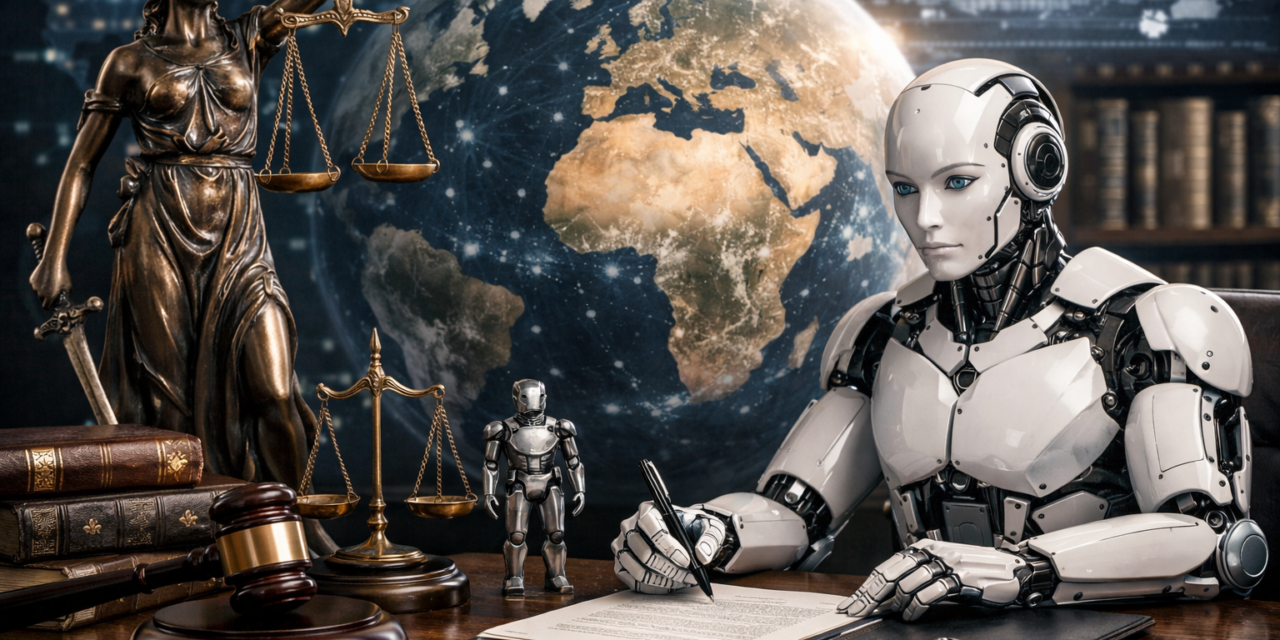
The rapid advancement of robotics and artificial intelligence has ushered in an era where intelligent machines are no longer confined to science fiction. From autonomous vehicles navigating our streets to sophisticated surgical robots assisting in life-saving operations, and from industrial robots transforming manufacturing to personal assistants integrated into our homes, robots are becoming increasingly ubiquitous. This pervasive integration necessitates a parallel development in the legal frameworks governing their design, deployment, and interaction with society. Robotic law, an emerging and evolving field, seeks to address the complex ethical, social, and legal challenges posed by these sophisticated technologies. As of May 2026, this field is characterized by a dynamic interplay of existing legal principles, nascent regulatory initiatives, and ongoing scholarly debate. This essay aims to provide a comprehensive overview of the current state of robotic law globally, exploring its foundational principles, key areas of concern, emerging regulatory landscapes, and future trajectories. We will delve into how existing legal doctrines are being adapted, new legislation is being drafted, and international efforts are underway to establish a coherent and effective framework for a world increasingly populated by intelligent machines.
Foundational Principles of Robotic Law
At its core, robotic law grapples with how to apply established legal concepts to entities that blur the lines between tool and agent, object and subject. Traditional legal frameworks were designed for human actors and tangible property, and they often struggle to accommodate the unique characteristics of robots, such as their autonomy, learning capabilities, and potential for causing harm. Several foundational principles are guiding the development of robotic law.
One of the most significant challenges is determining legal personhood for robots. Currently, robots are generally considered property, meaning their owners or operators are liable for their actions. However, as robots become more sophisticated, capable of making independent decisions, and even exhibiting forms of artificial general intelligence (AGI), questions arise about whether they should possess some form of legal status. Proponents of limited legal personhood argue that it could facilitate accountability, allowing robots themselves to be held responsible under certain circumstances, perhaps through insurance schemes or dedicated trusts. Critics, however, caution that granting personhood to machines could devalue human rights and create a slippery slope toward unintended consequences. The debate often hinges on the definition of consciousness, intent, and agency, concepts that are proving difficult to define even for humans, let alone for artificial entities.
Another core principle revolves around liability. When a robot causes harm, who is to blame? Is it the programmer who wrote the code, the manufacturer who assembled the robot, the owner who deployed it, or the user who interacted with it? Current legal systems typically rely on principles of negligence, product liability, and contract law. For instance, a manufacturer might be liable under product liability if a robot has a design defect that causes injury. A user might be held negligent if they misuse a robot in a foreseeable way. However, the autonomy of advanced robots complicates this. If a robot learns to perform a task in a way that deviates from its original programming and causes harm, tracing liability becomes a formidable task. Theories of strict liability, where responsibility is assigned regardless of fault, are being explored as a potential mechanism for addressing the inherent risks associated with autonomous systems. The concept of “foreseeability” is also being re-examined. What is foreseeable when dealing with a system capable of learning and adapting?
Ethical considerations are intrinsically linked to legal development. Principles of fairness, justice, and the avoidance of harm are paramount. The “three laws of robotics,” famously proposed by Isaac Asimov, while fictional, highlight some of the ethical dilemmas. Though not a legal blueprint, they serve as a conceptual starting point for discussions about robot behavior and ethical programming. Modern discussions often focus on principles like transparency, accountability, and human control. The “explainability” of AI decision-making, for example, is a crucial legal and ethical concern. If a robot’s decision-making process is a black box, how can we ensure it is fair and just, and how can we identify the cause of an error?
Finally, issues of data privacy and security are central to robotic law. Robots, especially those equipped with sensors and AI, collect vast amounts of data about their environment and users. Ensuring this data is handled responsibly, protected from breaches, and used ethically is a significant legal challenge. Existing data protection regulations, such as the GDPR in Europe, are being examined for their applicability to robots, and new regulations are being considered to address the specific challenges posed by robotic data collection and processing.
Key Areas of Concern and Emerging Legal Frameworks
The broad impact of robotics spans numerous sectors, each presenting unique legal challenges and prompting the development of specialized legal frameworks.
Autonomous Vehicles
Perhaps the most visible application of advanced robotics is in autonomous vehicles (AVs). The legal implications are profound, touching upon traffic laws, insurance, accident investigation, and even criminal liability. In May 2026, many jurisdictions are still in the process of adapting their traffic regulations to accommodate AVs. Key questions revolve around the “driver” of an AV. Is it the human occupant, the vehicle’s software, or the manufacturer? Liability in the event of an accident is a primary concern. The National Highway Traffic Safety Administration (NHTSA) in the United States, for example, has been working on guidelines for AV testing and deployment. Europe has seen initiatives like the Vienna Convention on Road Traffic, which has been updated to address automated driving systems, stipulating that a human driver must always be in control or able to resume control.
The ethical dilemma of the “trolley problem” is often cited in the context of AVs. If an AV faces an unavoidable accident, how should it be programmed to react? Should it prioritize the safety of its occupants, minimize casualties, or adhere to strict rules of the road? These programming choices have direct legal ramifications. Insurance models are also evolving, shifting from individual driver-based policies to product liability or fleet-based insurance. The data generated by AVs, including sensor readings, driving logs, and occupant behavior, raises significant privacy concerns. Determining who owns this data and how it can be used for accident investigation or other purposes is a critical legal issue. Companies are investing heavily in developing robust safety standards and ethical guidelines, but regulatory bodies are struggling to keep pace with the rapid technological advancements. The interplay between federal and state regulations in countries like the US also adds a layer of complexity.
Robots in Healthcare
The use of robots in healthcare, from surgical robots like the da Vinci system to companion robots for the elderly and AI-powered diagnostic tools, presents a complex legal landscape. When a surgical robot malfunctions, leading to patient injury, the lines of liability between the surgeon, the hospital, the robot manufacturer, and the software developer become blurred. Product liability laws are central here, but the sophisticated nature of these systems can make it difficult to pinpoint a defect. Negligence claims against healthcare providers for improper use or maintenance of robotic equipment are also likely.
The privacy of patient data handled by medical robots is another critical area. These robots often collect sensitive health information, requiring stringent data protection measures and compliance with regulations like HIPAA in the US and GDPR in Europe. Ethical considerations are paramount, particularly concerning robotic caregivers. Issues of consent, the nature of the human-robot relationship, and the potential for emotional manipulation are being debated. Should robots be used to provide emotional support, and what are the legal and ethical boundaries? The question of whether a robot can be considered a medical device, and thus subject to medical device regulations, is also being actively addressed by regulatory agencies worldwide. Ensuring the safety, efficacy, and reliability of these robots is a primary goal, and regulatory bodies are increasingly scrutinizing the validation and verification processes for AI-driven medical technologies.
Robots in the Workplace and Industrial Settings
Industrial robots have long been a staple of manufacturing, and their increasing sophistication, including collaborative robots (cobots) that work alongside humans, introduces new legal considerations. Workplace safety regulations are a primary focus. Employers have a duty to ensure a safe working environment, and this extends to the safe deployment and operation of robots. Accident investigations involving robots often require expert analysis to determine whether the robot itself was faulty, if safety protocols were inadequate, or if human error was the primary cause.
Product liability for industrial robots is also significant, especially concerning design flaws or safety feature failures. Workers’ compensation laws will need to adapt to accommodate injuries caused by robots, potentially re-evaluating definitions of “workplace hazard. ” The potential displacement of human workers by robots raises broader societal and economic questions, though these are less directly within the purview of current legal frameworks and more in the realm of policy and labor law. However, the legal framework around the gig economy and the increasing use of autonomous systems in delivery and logistics, for example, is also evolving, raising questions about worker classification and responsibility. The implementation of robust safety interlocks, emergency stop mechanisms, and clear operating procedures are legal requirements for manufacturers and operators of industrial robots.
Robots in Public Spaces and Security
The deployment of robots in public spaces, such as police drones for surveillance, bomb disposal robots, or even autonomous security guards, brings forth a host of legal and ethical concerns related to privacy, data collection, and the use of force. The Fourth Amendment in the US, which protects against unreasonable searches and seizures, is being tested by the expanded surveillance capabilities of robotic systems. Questions arise about whether a drone’s aerial view constitutes a search and what legal standards are required for its deployment.
The use of force by robots, particularly autonomous weapons systems, is a highly contentious issue. International humanitarian law and human rights law are being scrutinized to determine how they apply to lethal autonomous weapons. Debates are ongoing at the United Nations about the need for a new treaty to regulate or ban such systems. In civilian contexts, the use of robots by law enforcement or private security raises questions about accountability if a robot uses excessive force. The transparency of their operations and the mechanisms for oversight are crucial legal considerations. Public trust and acceptance are also key factors, and legal frameworks will need to balance security needs with civil liberties.
Robots and Intellectual Property
As robots become more autonomous and capable of creative output, questions of intellectual property (IP) are becoming increasingly relevant. Can a robot be an inventor? Can it hold copyright on a work of art it creates? Current IP laws generally require human authorship or inventorship. However, in May 2026, there are ongoing discussions and some preliminary legal challenges exploring how to address IP created by AI. In some jurisdictions, the legal precedent is emerging that AI-generated works may not be eligible for copyright protection, as the law typically protects human creativity. However, the legal landscape is fluid, and as AI becomes more sophisticated, this area is likely to see significant developments. The ownership of algorithms and the data used to train them also falls under the umbrella of IP law, with complex questions surrounding trade secrets and proprietary information.
International and Regional Regulatory Approaches
Given the global nature of robotics development and deployment, international cooperation and varying regional approaches are shaping the regulatory landscape.
European Union Initiatives
The European Union has been at the forefront of developing comprehensive legal and ethical frameworks for AI and robotics. The EU’s General Data Protection Regulation (GDPR) has significant implications for robots that process personal data. Beyond data protection, the EU has been actively working on broader AI regulations. The proposed AI Act aims to create a risk-based legal framework, classifying AI systems based on their potential to cause harm. Systems deemed to pose a high risk, such as those used in critical infrastructure, education, employment, and law enforcement, would face stricter requirements regarding data quality, transparency, human oversight, and robustness.
The EU has also established expert groups to provide recommendations on ethical guidelines for AI and robotics, focusing on principles like human agency and oversight, technical robustness and safety, privacy and data governance, democracy and the rule of law, and societal and environmental well-being. The EU’s approach is characterized by a strong emphasis on human rights and fundamental freedoms, seeking to ensure that AI and robotics develop in a way that benefits society without undermining democratic values. The ongoing debates within the EU reflect a desire to create a unified regulatory approach across member states, although implementation and enforcement remain significant challenges.
United States Regulatory Landscape
In the United States, the approach to robotic law has been more fragmented, with different federal agencies addressing specific aspects of robotic technology. For example, the NHTSA regulates autonomous vehicles, the Food and Drug Administration (FDA) oversees medical devices, including surgical robots, and the Federal Trade Commission (FTC) addresses issues of consumer protection and unfair or deceptive practices related to AI and robotics.
There has been a growing call for a more coordinated federal strategy. In recent years, the U. S. government has issued various policy documents and frameworks, such as the National Artificial Intelligence Initiative, aiming to promote AI research and development while addressing ethical considerations. However, a comprehensive piece of legislation specifically for robotics and AI, akin to the EU’s AI Act, has not yet materialized. Instead, the U. S. relies heavily on existing statutes and agency guidance, supplemented by state-level initiatives, particularly in areas like autonomous vehicle testing and deployment. The emphasis is often on fostering innovation while managing risks through sector-specific regulations and voluntary industry standards. The evolving nature of technology means that regulatory bodies are constantly playing catch-up, adapting existing rules or issuing new interpretations.
International Efforts and Standards
Beyond regional blocs, international organizations are playing a crucial role in developing global norms and standards for robotics and AI. The United Nations has been a key forum for discussions on autonomous weapons systems, with ongoing debates about the need for international treaties. The International Organization for Standardization (ISO) and the International Electrotechnical Commission (IEC) are developing technical standards for robotics, covering areas like safety, interoperability, and performance. These standards are crucial for facilitating global trade and ensuring a baseline level of safety and reliability for robotic systems.
The IEEE Standards Association is also actively involved in developing standards for AI ethics, robotics, and autonomous systems, aiming to create a framework for responsible innovation. These international efforts are vital for harmonizing regulations across different countries, preventing regulatory fragmentation, and ensuring that the development and deployment of robots are guided by shared principles of safety, fairness, and human well-being. However, achieving consensus on complex issues like AI governance and autonomous weapons can be a slow and challenging process.
Emerging Markets and Developing Nations
The regulatory landscape in emerging markets and developing nations is highly diverse. Some countries are actively investing in AI and robotics research and development and are beginning to consider legal frameworks, while others are still in the early stages of understanding the implications. Challenges in these regions often include limited resources, a lack of technical expertise, and the need to balance innovation with basic societal needs.
Many developing nations are keen to leverage robotics for economic growth, particularly in sectors like agriculture and manufacturing. However, they also face significant ethical and social challenges, including the potential for job displacement and the need for robust data protection. International collaboration and knowledge transfer are crucial in these contexts to ensure that developing nations can benefit from robotic technologies while mitigating potential risks and establishing appropriate legal and ethical safeguards. The development of flexible and adaptable regulatory frameworks that can accommodate local contexts and priorities is essential.
Ethical Considerations and Societal Impact
The legal frameworks governing robotics are deeply intertwined with ethical considerations and the broader societal impact of these technologies. As robots become more integrated into our lives, they raise profound questions about what it means to be human, our relationships with machines, and the future of society.
Bias and Discrimination in AI
A significant ethical and legal concern is the potential for bias and discrimination embedded within AI algorithms that power robots. If the data used to train these algorithms reflects existing societal biases, the robots can perpetuate or even amplify these biases. This can lead to discriminatory outcomes in areas such as hiring, loan applications, and even law enforcement. For example, facial recognition systems have been shown to be less accurate for certain demographic groups, raising concerns about their use in surveillance and policing. Legal challenges are emerging to address these discriminatory outcomes, and there is a growing demand for transparency and explainability in AI decision-making to identify and rectify biases. Ensuring algorithmic fairness and equity is a critical challenge for robotic law.
Job Displacement and the Future of Work
The automation driven by robotics has the potential to displace human workers in various sectors, leading to significant economic and social disruption. While automation can increase productivity and create new jobs in areas like robot maintenance and AI development, the transition can be challenging for many. Legal and policy responses are being debated, including proposals for universal basic income, retraining programs, and new forms of social safety nets. The legal definition of employment and the rights of workers in an increasingly automated economy are critical areas for future consideration. The question of how to ensure a just transition and mitigate the negative impacts of automation on the workforce is a pressing societal and economic challenge that will undoubtedly shape future robotic law.
Human-Robot Interaction and Relationships
As robots become more sophisticated in their ability to interact with humans, new ethical and legal questions arise concerning the nature of these relationships. Companion robots designed to provide emotional support to the elderly or lonely, or social robots used in education and therapy, raise questions about consent, deception, and the potential for emotional manipulation. Should robots be programmed to deceive users about their true nature or capabilities? What are the ethical boundaries of forming emotional bonds with machines? Legal frameworks may need to consider issues such as the disclosure of a robot’s artificial nature and the potential for exploitation or harm in human-robot interactions. The psychological and social impacts of these interactions are being studied, and legal and ethical guidelines will need to evolve to address these complex dynamics.
Autonomy, Control, and Accountability
The increasing autonomy of robots poses a fundamental challenge to our notions of control and accountability. As robots make more independent decisions, it becomes more difficult to attribute responsibility when things go wrong. This is particularly true for autonomous weapons systems, where the decision to take a human life could be delegated to a machine. The debate over lethal autonomous weapons (LAWs) is a stark example of the challenges in maintaining meaningful human control over increasingly capable machines. International efforts to regulate or ban such systems are ongoing, reflecting a global concern about the potential for unintended consequences and the erosion of human judgment in life-and-death decisions. Legal frameworks must establish clear lines of accountability and ensure that humans remain ultimately in control of critical decisions, especially those involving harm.
The ‘Rights’ of Robots
While not widely accepted in May 2026, the philosophical debate around whether robots, especially highly advanced AI, could eventually warrant some form of rights is a growing area of discussion. This is distinct from legal personhood, which focuses on liability and legal standing. The idea of robot rights touches upon questions of consciousness, sentience, and the moral status of artificial beings. While purely theoretical at this stage for most legal scholars, this discussion highlights the profound philosophical implications of creating increasingly sophisticated artificial intelligences. It prompts us to consider our evolving relationship with non-human entities and the potential for future ethical obligations towards them.
Challenges and Future Directions in Robotic Law
The field of robotic law is characterized by ongoing challenges and a constant drive toward future adaptation. The rapid pace of technological innovation continually outstrips the ability of legal systems to fully comprehend and regulate it.
Pace of Innovation vs. Legal Adaptation
One of the most significant challenges is the sheer speed at which robotics and AI are advancing. New capabilities emerge with remarkable frequency, often outpacing the deliberative processes of legislative bodies and judicial systems. This creates a perpetual state of regulatory lag, where laws and guidelines struggle to remain relevant. Future directions must involve more agile and adaptive regulatory approaches. This could include greater reliance on flexible frameworks, regulatory sandboxes that allow for controlled testing of new technologies, and the establishment of expert advisory bodies that can provide timely technical and ethical guidance to policymakers. The development of “living laws” that can be updated dynamically based on technological advancements is a concept being explored.
Global Harmonization of Laws
The international nature of robotics development and deployment necessitates global harmonization of laws and standards. Without it, companies face a complex and potentially conflicting web of regulations across different jurisdictions, hindering innovation and creating legal uncertainty. Achieving this harmonization is a monumental task, given the diverse legal traditions, ethical values, and economic interests of nations. Future efforts will likely focus on building consensus through international organizations, developing shared technical standards, and promoting best practices. However, significant divergences on critical issues, such as autonomous weapons and data privacy, are likely to persist.
Ensuring Transparency and Explainability
The “black box” nature of many AI algorithms poses a significant challenge for legal systems. If the decision-making process of a robot or AI system cannot be understood or explained, it becomes difficult to establish accountability, identify bias, or ensure fairness. Future directions in robotic law will emphasize the importance of transparency and explainability. This may involve legal requirements for AI systems to provide clear justifications for their decisions, particularly in high-stakes applications. Research into explainable AI (XAI) techniques will be crucial, and legal frameworks will need to adapt to incorporate these advancements.
Liability and Insurance Models
As discussed, determining liability when autonomous systems cause harm remains a complex issue. Future legal developments will likely involve the refinement of existing liability doctrines and the creation of new insurance models tailored to the risks posed by robotics. This could include the development of no-fault insurance schemes for certain types of robotic incidents, as well as clearer frameworks for product liability and manufacturer responsibility. The interaction between human intent and autonomous action will continue to be a central focus of legal analysis.
The Role of Ethics in Lawmaking
The ethical considerations surrounding robotics are no longer solely philosophical discussions; they are increasingly influencing the development of legal frameworks. As we move forward, there will be a greater need for interdisciplinary collaboration between legal scholars, ethicists, technologists, and social scientists. Ethical principles such as fairness, accountability, transparency, and human dignity will need to be embedded into the design and regulation of robotic systems. This requires a proactive approach to anticipate potential ethical dilemmas and develop legal solutions before significant harm occurs.
Education and Public Understanding
A crucial aspect of navigating the future of robotic law is fostering public understanding and education. As robots become more integrated into society, public discourse and engagement are essential for shaping appropriate legal and ethical norms. Educational initiatives can help demystify robotics and AI, promote informed debate, and ensure that regulatory decisions reflect societal values. Future legal and policy developments will benefit from a well-informed citizenry capable of engaging constructively with the complex challenges and opportunities presented by robotics.
Conclusion
The landscape of robotic law as of May 2026 is a testament to the profound societal transformations brought about by the rapid advancement of intelligent machines. It is a field characterized by dynamic evolution, where established legal principles are being reinterpreted and new regulatory frameworks are being forged to address unprecedented challenges. From the intricate questions of liability surrounding autonomous vehicles to the ethical dilemmas of AI in healthcare and the societal implications of automation in the workplace, robotic law is striving to provide order and accountability in an increasingly complex technological environment.
Key foundational principles such as legal personhood, liability, and the integration of ethical considerations are at the forefront of this legal development. Emerging regulatory approaches in regions like the European Union, with its comprehensive AI Act, and the more sector-specific strategies in the United States, highlight the diverse efforts to govern this transformative technology. International collaborations are essential for creating a coherent global framework, though significant challenges remain in achieving universal consensus.
The ethical considerations are inseparable from the legal ones. Issues of bias in AI, the future of work in an automated economy, and the nuanced nature of human-robot interactions demand careful legal and societal attention. As robots become more autonomous and capable, questions of control, accountability, and even the potential “rights” of robots continue to fuel scholarly debate and legislative foresight.
Looking ahead, the challenges are considerable. The relentless pace of innovation necessitates agile and adaptive legal systems. Global harmonization of laws, ensuring transparency and explainability in AI, and evolving liability and insurance models are critical future directions. Ultimately, the successful integration of robotics into society will depend on a robust and forward-thinking legal framework, underpinned by ethical principles and informed public discourse. Robotic law is not merely a set of rules; it is an ongoing endeavor to ensure that technological progress serves humanity’s best interests, fostering innovation while safeguarding fundamental values and rights. The journey is far from over, and the continuous dialogue between technology, ethics, and law will shape the future of our world.
Bibliography
- European Commission. (2024). Artificial Intelligence Act: Regulation (EU) 2024/1689 of the European Parliament and of the Council. Official Journal of the European Union.
- Calo, R. (2021). Robotics and the Lessons of Cyberlaw. California Law Review, 103(3), 513–563.
- Lin, P., Abney, K., & Bekey, G. A. (2022). Robot Ethics 2.0: From Autonomous Cars to Artificial Intelligence. Oxford University Press.
- Pagallo, U. (2023). The Laws of Robots: Crimes, Contracts, and Torts. Springer.
- European Parliament. (2025). Report on Artificial Intelligence, Robotics and Ethics in the Digital Age. Brussels: European Parliamentary Research Service.
- Bryson, J. J. (2024). The Artificial Intelligence and Ethics Debate: A Global Perspective. AI & Society, 39(2), 245–260.
- IEEE Standards Association. (2025). Ethically Aligned Design: A Vision for Prioritizing Human Well-being with Autonomous and Intelligent Systems. IEEE.
- United Nations. (2023). Report of the High-Level Panel on Digital Cooperation. New York: United Nations Publications.
- European Union Agency for Fundamental Rights. (2025). Artificial Intelligence and Fundamental Rights: Challenges and Opportunities. Luxembourg: Publications Office of the European Union.
- Gunkel, D. J. (2022). Robot Rights. MIT Press.
References:
Unknown Author (n.d.). Untitled. journalisslp.com. Retrieved from https://journalisslp.com/index.php/isslp/article/download/149/238/906
George Maliha & Ravi B Parikh & Sara Gerke & I Glenn Cohen (2021). Artificial Intelligence and Liability in Medicine: Balancing Safety and Innovation – PMC. pmc.ncbi.nlm.nih.gov. Retrieved from https://pmc.ncbi.nlm.nih.gov/articles/PMC8452365/
Unknown Author (n.d.). Just a moment…. www.researchgate.net. Retrieved from https://www.researchgate.net/publication/393163737_Governance_and_Regulation_of_Autonomous_Weapons_and_Cybersecurity_2016-2024_The_Influence_of_States_International_Organizations_and_Civil_Society_on_International_Humanitarian_Law
Unknown Author (n.d.). Just a moment…. www.researchgate.net. Retrieved from https://www.researchgate.net/publication/374939549_Ethics_of_Social_Robotics_Individual_and_Societal_Concerns_and_Opportunities
Unknown Author (n.d.). Just a moment…. www.researchgate.net. Retrieved from https://www.researchgate.net/publication/372094027_The_Legal_Status_Of_Artificial_Intelligence_And_The_Violation_Of_Human_Rights
Unknown Author (2026). Just a moment…. www.sciencedirect.com. Retrieved from https://www.sciencedirect.com/science/article/pii/S0160791X23000374
Unknown Author (n.d.). Untitled. www.abiresearch.com. Retrieved from https://www.abiresearch.com/blog/robotics-research
Kourosh Zareinia & Sofya Langman & Yaser Maddahi & Nicole Capicotto (2021). Roboethics principles and policies in Europe and North America – PMC. pmc.ncbi.nlm.nih.gov. Retrieved from https://pmc.ncbi.nlm.nih.gov/articles/PMC8572833/
Unknown Author (n.d.). Just a moment…. www.emerald.com. Retrieved from https://www.emerald.com/nbri/article/17/2/237/1339030/When-autonomous-driving-meets-the-artificial
Unknown Author (2026). Just a moment…. www.sciencedirect.com. Retrieved from https://www.sciencedirect.com/science/article/pii/S0149763423001999
Unknown Author (2017). Frontiers | A Review of Future and Ethical Perspectives of Robotics and AI. www.frontiersin.org. Retrieved from https://www.frontiersin.org/journals/robotics-and-ai/articles/10.3389/frobt.2017.00075/full
IFR International Federation of Robotics (n.d.). Top 5 Global Robotics Trends 2026 – International Federation of Robotics. ifr.org. Retrieved from https://ifr.org/ifr-press-releases/news/top-5-global-robotics-trends-2026
Kiyan Afsari & Hussain Al-Ahmad & Mohammad Rababa & Husameldin Mukhtar & Saad Amin & Burkhard Schafer & Shuq Hussein & Nasiruddeen Muhammad (2023). Autonomous vehicles regulations: Challenges and opportunities – University of Edinburgh Research Explorer. www.research.ed.ac.uk. Retrieved from https://www.research.ed.ac.uk/en/publications/autonomous-vehicles-regulations-challenges-and-opportunities/
Ketan Ramakrishnan & Christoph Winter & Cullen OKeefe & Janna Tay (2025). Law-Following AI: Designing AI Agents to Obey Human Laws – Institute for Law & AI. law-ai.org. Retrieved from https://law-ai.org/law-following-ai/
Xiaoli Shentu (2024). A review on legal issues of medical robots – PMC. pmc.ncbi.nlm.nih.gov. Retrieved from https://pmc.ncbi.nlm.nih.gov/articles/PMC11124718/
Marina Jirotka & Alan T Winfield (2018). Ethical governance is essential to building trust in robotics and artificial intelligence systems – PMC. pmc.ncbi.nlm.nih.gov. Retrieved from https://pmc.ncbi.nlm.nih.gov/articles/PMC6191667/
Unknown Author (n.d.). Untitled. scholarship.law.umn.edu. Retrieved from https://scholarship.law.umn.edu/cgi/viewcontent.cgi?article=1566&context=mjlst
Kiyan Afsari & Hussain Al-Ahmad & Mohammad Rababa & Husameldin Mukhtar & Saad Amin & Burkhard Schafer & Shuq Hussein & Nasiruddeen Muhammad (2023). Autonomous vehicles regulations: Challenges and opportunities – University of Edinburgh Research Explorer. www.research.ed.ac.uk. Retrieved from https://www.research.ed.ac.uk/en/publications/autonomous-vehicles-regulations-challenges-and-opportunities/
Blanca Deusdad (2024). Ethical implications in using robots among older adults living with dementia – PMC. pmc.ncbi.nlm.nih.gov. Retrieved from https://pmc.ncbi.nlm.nih.gov/articles/PMC11465238/
Jorge Rodrigues Simão, May 2026